
Explore our top-performing heavy-duty solar floodlights and integrated street light systems designed for extreme temperature resilience, long autonomy, and maintenance-free commercial operations.
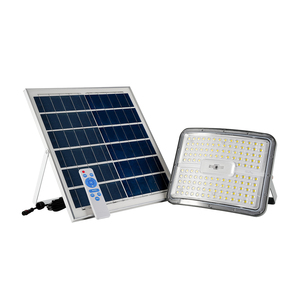
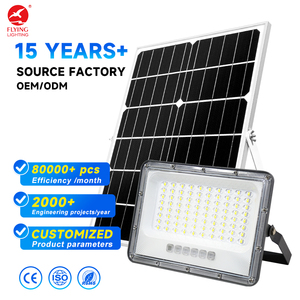
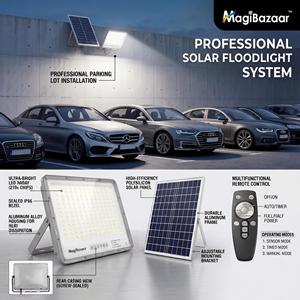
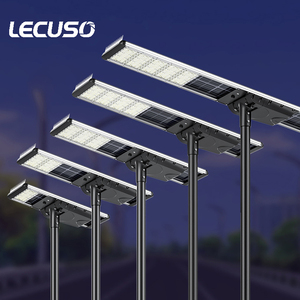
An engineering analysis of thermal endurance, optical precision, and battery chemistry requirements for international projects managed out of Luxembourg’s financial and EPC hubs.
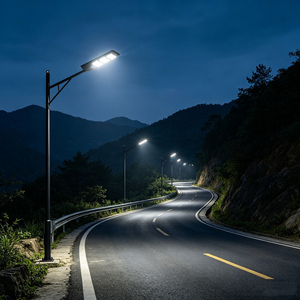
Desert environments subject solar luminaires to continuous ambient temperatures exceeding 50°C and direct surface radiant heating up to 80°C. Standard commercial solar lights experience rapid thermal runaway, battery degradation, and LED lumen decay under such stress. Desert-spec systems utilize 6063-T6 extruded aluminum alloy housing with passive thermal convection channels, phase-change heat dissipation barriers, and elevated battery chambers to isolate LiFePO4 cells from PV panel heat transfer.
Abrasive silica dust and fine particulate matter present in desert corridors destroy standard rubber gaskets and cloud optical covers. Our desert-grade factory specifications mandate dual-lip silicone seals rated to IP68 standards, tempered glass optical lenses with nano-hydrophobic self-cleaning coatings, and anti-static PV glass treatments that prevent fine dust adhesion, preserving solar absorption efficiency even during severe dust storm events.
High temperatures reduce solar panel voltage output significantly. Standard PWM controllers lose up to 40% of generated energy in thermal desert zones. Advanced Maximum Power Point Tracking (MPPT) algorithms continuously adjust tracking parameters at 99.5% efficiency. Integrated dynamic dimming profiles automatically adjust power consumption based on state-of-charge (SoC) reserves, guaranteeing 3 to 5 nights of continuous autonomy during prolonged cloud or dust cover.
| Engineering Metric | Standard Outdoor Solar Light | Desert-Spec Commercial Solar System | Operational Impact |
|---|---|---|---|
| Operating Temperature Range | -10°C to +45°C | -20°C to +65°C Ambient (+85°C Surface) | Prevents thermal system shutdown in desert climates. |
| Battery Chemistry & Cycle Life | Standard Li-ion / Lead Acid (500–1,500 Cycles) | Grade-A LiFePO4 with BMS (6,000+ Cycles @ 80% DoD) | Extends system lifespan to 12+ years without battery replacement. |
| Ingress Rating & Enclosure | IP65 Molded ABS / Basic Aluminum | IP68 Corrosion-Resistant Anodized 6063 Aluminum | Complete protection against sand pressure and dust infiltration. |
| Solar Controller Efficiency | PWM Control (65%–75% Efficiency) | Ultra-Fast MPPT Tracking (99.5% Efficiency) | Maximizes solar harvest despite thermal voltage drop. |
| Luminous Efficacy | 100 - 130 Lumens/Watt | 190 - 220 Lumens/Watt (Philips Lumileds 5050) | Higher illumination with smaller battery/PV footprint. |
| Wind Load Resistance | 110 km/h (Standard Urban) | Up to 240 km/h (AASHTO Rated Hurricane & Storm Resistant) | Prevents structural failure in high-wind desert plains. |
As a central pillar of the European Union's financial and legal system, Luxembourg hosts major international construction holding companies, renewable energy investment funds, and engineering firms that direct global infrastructure projects. While Luxembourg’s domestic climate requires frost-resistant, low-irradiance solar optimized luminaires for autumn and winter operations, the engineering procurement offices located in Kirchberg, Cloche d'Or, and Belval frequently manage tenders for cross-border projects across North Africa, the Arabian Peninsula, and South America.
Sourcing desert-spec solar lighting from established manufacturers offers Luxembourg project directors key economic and environmental operational advantages:
Luxembourg’s proximity to major European freight logistics network nodes (such as the Bettembourg Container Terminal and Luxembourg Findel Cargo Airport) facilitates streamlined consolidated shipments directly from manufacturing plants to job sites globally under DDP, FOB, or CIF Incoterms.
Global infrastructure initiatives financed by Luxembourg-based funds are held to rigorous EU Taxonomy standards. Utilizing zero-carbon solar lighting solutions eliminates grid connection energy usage and offset credits while avoiding high trenching costs.
Every commercial tender requires detailed DIALux photometric calculations. Manufacturers supplying Luxembourg contractors provide complete IES files, light pole layout studies, and shadow analysis to ensure compliance with international roadway lighting norms (EN 13201 / IESNA RP-8).
We deliver customized OEM/ODM commercial solar street and flood lighting fixtures engineered to strict international standards.
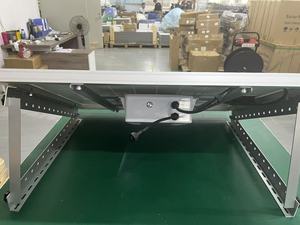
Our factories adhere to rigorous quality management workflows. Every luminaire undergoes 100% aging tests, high-voltage flash testing, IP68 water immersion testing, and simulated thermal chamber testing before packaging.
With nearly two decades of continuous research and development, our engineering teams have over 45 years of combined solar engineering expertise, successfully delivering lighting projects across 6 continents.
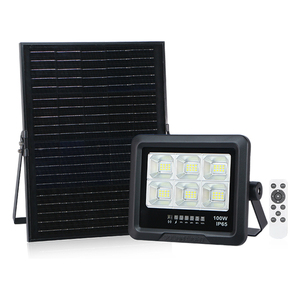
Utilizing high-efficiency monocrystalline solar panels and Philips Lumileds LED chips delivering up to 22,200 lumens per fixture (scalable to 44,400 lm per pole assembly), we maximize lighting density while minimizing pole counts.
Answers to critical questions regarding technical specs, international certifications, shipping logistics, and desert climate durability.
Standard solar lights rely on plastic housings, basic PWM controllers, and low-temperature Li-ion batteries that quickly fail under desert conditions. Desert-grade luminaires incorporate IP68-sealed aluminum bodies, micro-ventilated battery shields, heat-resisting LiFePO4 cells, and 99.5% efficient MPPT tracking to withstand continuous thermal exposure exceeding +50°C and severe sand abrasion.
Our complete line of commercial solar street lights and floodlights holds CE, RoHS, ISO 9001:2015, CB, IEC 60598, and IP68 certification reports. Products engineered for specific international markets also meet Buy American Compliant criteria where mandated by funding agencies.
Lithium Iron Phosphate (LiFePO4) chemistry exhibits exceptional thermal stability compared to standard cobalt-based batteries. Paired with our intelligent Battery Management System (BMS), the cells automatically regulate charge rates during peak daytime thermal spikes, preventing thermal degradation while providing over 6,000 deep discharge cycles.
Yes. We regularly handle direct international project dispatch via major container lines (FOB, CIF, DDP) directly to port destinations in the Middle East, West Africa, South America, or European consolidation hubs such as Antwerp and Rotterdam, complete with export documentation and bill of lading support.
Our sales engineering department generates comprehensive DIALux photometric simulations, illuminance contour maps, and light pole spacing calculations according to project specs (EN 13201 / IESNA standards). Standard IES files are available for engineering review.
Due to solid-state LED components, LiFePO4 long-cycle batteries, and hydrophobic self-cleaning tempered glass on the solar panels, routine maintenance is limited to periodic inspection of PV glass surfaces after severe sandstorms to remove heavy dust deposits and maintain maximum charge rate.
Partner with a trusted global manufacturer. Connect with our engineering sales team to receive factory-direct pricing, technical datasheets, and photometric layouts tailored to your commercial solar project specifications.
Send an Inquiry