
Engineered for high lumen output, severe winter weather resilience, and continuous smart connectivity across Austrian urban and rural territories.
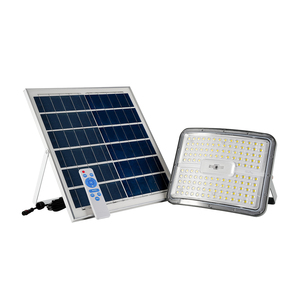
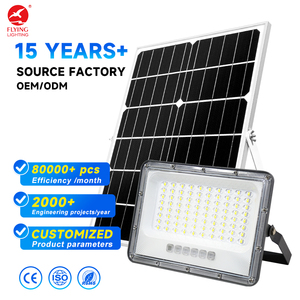
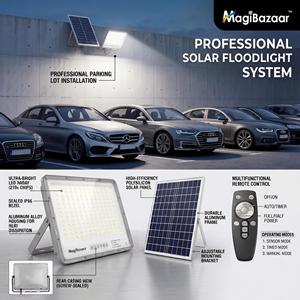
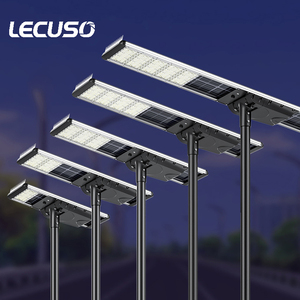
Decarbonizing Municipal Infrastructure Under European Energy Directives and Severe Alpine Conditions
All IoT Smart City Solar Lighting systems supplied into the Republic of Austria must strictly conform to European Norm EN 13201 (Road Lighting Performance), ÖNORM O 1052 (Prevention of Light Pollution), and the European Union’s RoHS & CE Directives. Systems deployed in federal transport routes (ASFINAG) must also meet rigorous mechanical stability standards against heavy wind and snow loads.
The Austrian outdoor lighting market is undergoing a rapid technological transformation. Driven by the Smart City Wien Framework Strategy 2050, the Graz Green Mobility Initiative, and strict federal carbon-neutrality targets by 2040, municipal procurement teams and commercial contractors are turning away from conventional grid-tied sodium fixtures. However, Austria's unique geographical profile—spanning temperate eastern plains to harsh, high-altitude Alpine regions in Tyrol, Carinthia, and Salzburg—presents extreme operational demands on off-grid solar street lighting.
Austrian winters experience low solar angles and overcast conditions. Insolation drops from 5.8 kWh/m²/day in July to 1.1 kWh/m²/day in December. Our dual-MPPT controllers adjust energy conversion curves in real-time to maximize power harvesting under diffused sunlight.
High-altitude wind gusts in the Alps reach over 150 km/h, accompanied by heavy wet snow accumulation. Our structural steel poles and tempered glass mono-solar panels are rated to withstand 180 mph wind velocities and up to 2.4 kN/m² snow loading.
To preserve Austria's natural mountain ecosystems and night sky, our optical fixtures feature precise 0% Upward Light Output Ratio (ULOR). Warm CCT profiles (2700K to 3000K) minimize blue-light dispersion and safeguard nocturnal fauna.
Architectural Overview of Smart Lighting Mesh Networks and Sub-Zero LiFePO4 Chemistry
Modern Smart Cities require far more than standalone illumination. They demand interconnected telemetry nodes capable of remote diagnostic reporting, dynamic dimming, automated fault detection, and environmental data aggregation. As an established global manufacturer, we integrate industrial-grade LoRaWAN, NB-IoT, and Zigbee 3.0 Wireless Controllers directly into our solar luminaire heads.
| IoT Protocol Option | Operational Bandwidth | Transmission Range | Austrian Network Compatibility | Primary Municipal Application |
|---|---|---|---|---|
| LoRaWAN Mesh | Sub-GHz (868 MHz EU) | Up to 15 km (Rural) / 3 km (Urban) | Private Municipal Gateways / A1 Digital | Smart City Vienna, Rural Roads & Bike Paths |
| NB-IoT (Narrowband) | Licensed Cellular (LTE) | Carrier Base Station Coverage | Magenta Telekom / A1 Telekom Austria | ASFINAG Highways, Linz Industrial Parks |
| Zigbee 3.0 Cluster | 2.4 GHz Mesh | Up to 300 m (Node to Node) | Standalone Closed Smart Loops | Commercial Parking Compounds & HOAs |
| Cellular LTE-M / 4G | High Bandwidth Cellular | National Cellular Footprint | Drei Austria / National Telecoms | High-Density CCTV Security Integration |
Standard Lithium Iron Phosphate (LiFePO4) batteries experience severe capacity degradation and charging blockades when ambient temperatures drop below 0°C. In regions such as Innsbruck or Klagenfurt, sub-zero snaps reaching -20°C are common during midwinter.
To overcome this critical failure point, our Austrian-spec smart solar lighting systems integrate an automated Thermal Heating Element with Microprocessor Feedback. When solar harvesting begins at dawn, if cell temperatures are below 0°C, the controller diverts initial solar current to an internal polyimide heating layer wrapped around the battery core. Once the core warms to 5°C, standard high-efficiency charging resumes. This guarantees 100% battery longevity (3,500+ cycles at 80% DoD) over a 10-to-12-year lifespan.
From Alpine Highway Rest Areas to Urban Green Spaces, Delivering Maintenance-Free Illumination
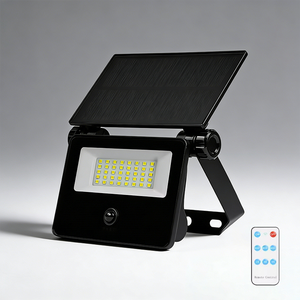
Deploying integrated IoT All-In-One solar lights along pedestrian corridors, parks, and cycle paths. Remote Central Management Systems (CMS) allow city engineers to schedule dimming profiles, receive automated failure alerts, and adjust lighting levels based on foot traffic sensors.
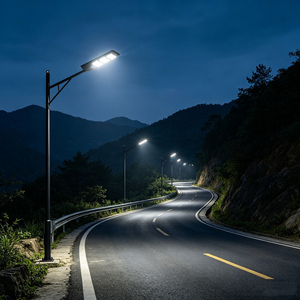
Providing high-lumen, continuous illuminate output (EN 13201 Class M3/M4) for highway entry ramps, truck parking bays, and rest areas along the A1, A2, and A9 Autobahns. Eliminates costly electrical trenching and high grid connection fees across remote corridors.
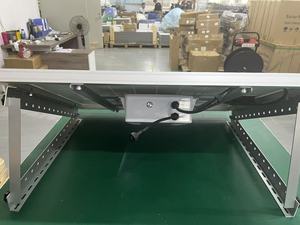
Severe Alpine weather solutions fitted with 55° steep-tilt solar panel mounts to ensure rapid snow shedding during winter blizzards. Corrosion-resistant anodized finishes resist chemical road salts used across mountain passes in Vorarlberg and Tyrol.
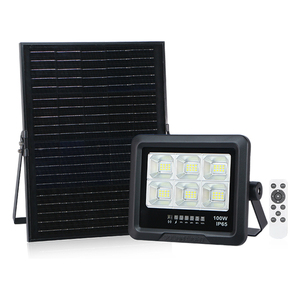
Heavy-duty split-system solar floodlights tailored for commercial warehouses, manufacturing plants, and freight terminals around Linz and Wels. Motion-activated radar boost lighting maximizes security while preserving battery autonomy for up to 7 rainy days.
Providing zero-carbon safety lighting across universities, technical schools, and public sports facilities in Salzburg and Klagenfurt. Low-voltage DC operational architecture guarantees total safety against electrical shock in public zones.
Autonomous solar flashers, pedestrian crosswalk signal beacons, and emergency roadside warning units deployed in off-grid rural municipalities across Lower Austria where grid connection is financially unviable.
Expert Clarifications on Winter Autonomy, Norm Compliance, and Wholesale Procurement
Our Austrian-configured systems combine high-efficiency monocrystalline PV panels (up to 23.5% cell efficiency) with intelligent MPPT controllers and oversized LiFePO4 batteries equipped with internal thermal heating. The system automatically adjusts output according to state-of-charge (SoC) algorithms, ensuring 5 to 7 days of continuous illumination even under persistent overcast conditions in winter months.
Yes. All luminaires comply strictly with EN 13201 light classes (M1–M6 for vehicular roads, P1–P6 for pedestrian walkways). Furthermore, optics are custom-engineered for 0% Upward Light Output (ULOR 0%) and offered in warm color temperatures (2700K–3000K), satisfying ÖNORM O 1052 dark sky light pollution guidelines.
Absolutely. We support open standard communications protocols including LoRaWAN (868 MHz), NB-IoT, and cellular LTE-M. Our IoT nodes interface seamlessly with leading Central Management System (CMS) platforms via RESTful API or MQTT protocols, allowing Austrian municipal engineers to control dimming schedules and monitor battery diagnostics in real time.
For high-altitude Alpine deployments, we supply specialized mounting brackets adjusted to a 55° to 60° inclination angle. This steep angle, combined with hydrophobic glass coatings on our PV modules, causes snow to naturally slide off under gravity. Additionally, heat radiated by the LED luminaire head during operation helps clear lower panel edges.
By eliminating grid infrastructure costs (trenching, cabling, transformer stations, grid connection permits) and utility electricity costs, clients typically achieve full capital payback within 2.5 to 4 years. When factoring in Austria's rising commercial electricity rates and carbon tax structures, lifetime savings over 15 years exceed 60% compared to traditional AC LED street lights.
We provide a comprehensive 5-year warranty on all electronic components, LED chips, MPPT controllers, and LiFePO4 batteries, along with a Lifetime Warranty on structural aluminum/steel poles. Complete DIALux photometric design reports, wind-load calculation documentation, and step-by-step installation support are provided for all tender bids.
18+ Years of Global Manufacturing Excellence, ISO 9001:2015 Quality Management & Custom Engineering
As a recognized tier-1 global manufacturer of commercial solar lighting solutions since 2006, Solar Lighting International, Inc. brings nearly two decades of engineering authority to the Austrian market. Our engineering team combines over 45 years of combined solar technology experience, partnering with municipal governments, civil contractors, and commercial developers worldwide.
We provide complimentary DIALux photometric simulations prior to order placement. Visualize illuminance levels (Lux), uniformity ratios (U0), and light distribution layouts to guarantee 100% compliance with Austrian tender specifications.
Every component—from Philips Lumileds LED chips to MPPT controllers and Grade-A LiFePO4 cells—undergoes multi-stage factory testing, burn-in validation, and environmental thermal cycling before shipment.
Full support for wholesale importers, OEM branding, custom housing colors (RAL palette), and localized packaging for distribution partners across Austria and Central Europe.




Contact our senior sales engineers today to request technical specifications, custom DIALux photometric studies, or bulk distributor pricing for the Austrian market.