
A rigorous engineering guide for municipal buyers, DOT contractors, and commercial developers installing active solar LED traffic signs in Western Washington's distinct maritime micro-climate.
The procurement landscape for active transportation safety infrastructure in the Pacific Northwest—specifically within the Seattle-Tacoma-Bellevue metropolitan area—presents unique environmental and photometric challenges. With an average of 152 rainy days per year and winter solar irradiance dropping to as low as 1.2 to 1.5 kWh/m²/day during peak overcast months, traditional off-grid solar traffic signs often fail due to premature battery depletion and inadequate power point tracking.
As a specialized factory and direct B2B engineering supplier serving the Greater Seattle market, our integrated LED solar traffic sign systems are designed specifically to resolve low-light degradation. By combining ultra-high-efficiency monocrystalline solar arrays (exceeding 23% cell efficiency), Maximum Power Point Tracking (MPPT) intelligent controllers, and cold-weather LiFePO4 battery storage, our systems achieve 100% operational autonomy—even through 7 to 10 consecutive days of heavy cloud cover and Puget Sound maritime fog.
Explore our heavy-duty solar floodlights, integrated street lights, and emergency warning lights deployed across Seattle industrial zones, highways, and public works facilities.
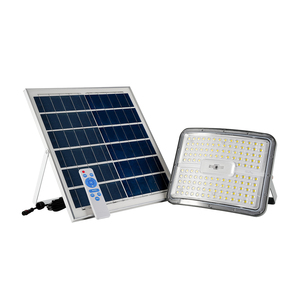 200W Commercial
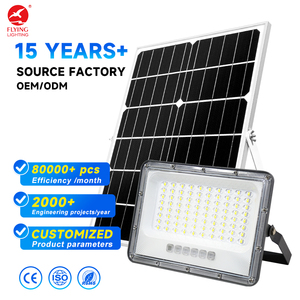 Radar Sensor
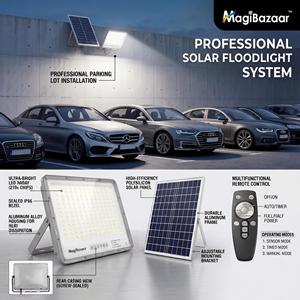 500W Heavy-Duty
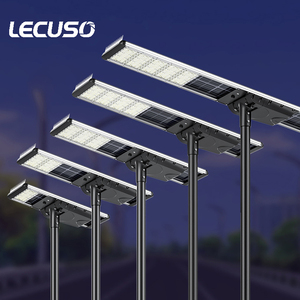 All-In-One
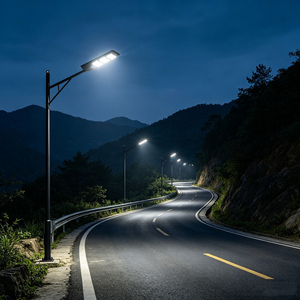 Stainless Steel
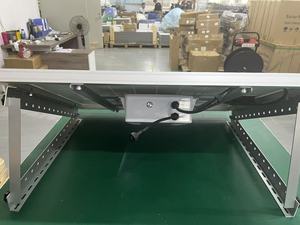 MPPT Controlled
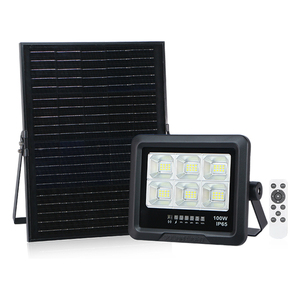 Billboard & Sign
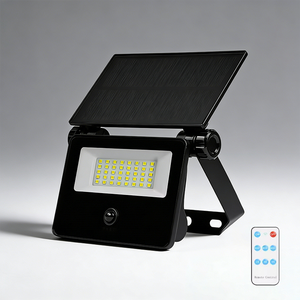 Portable / Work
Standard off-the-shelf solar signs degrade quickly in the Pacific Northwest. Here is how our factory-engineered integrated solar signs solve Western Washington’s infrastructure challenges.
Our algorithms track maximum power points at 99.2% efficiency under ambient, scattered, or diffuse sunlight typical of Seattle rainy winters, producing up to 35% more charging energy than PWM controllers.
Continuous exposure to Puget Sound moisture causes electrical corrosion. Our sign enclosures feature double-O-ring silicone seals, hydrophobic breather valves, and conformal-coated PCBs.
Winter snaps in King and Snohomish counties can freeze standard batteries. Our internal Lithium Iron Phosphate batteries feature thermal insulation wrap and automatic low-temp charge throttling.
Integrated LED arrays feature high-luminance retroreflective optical lenses, ensuring clarity and contrast through dense Pacific Northwest maritime fog and night-time rain distortion.
| Engineering Parameter | Standard Generic Solar Signs | Our Factory-Grade Integrated Systems | Seattle Municipal Advantage |
|---|---|---|---|
| Solar Cell Technology | Polycrystalline (15-17% eff.) | N-Type Monocrystalline (23.5% eff.) | Captures maximum energy during overcast light |
| Autonomy Period | 2 to 3 Days Backup | 7 to 10 Days Autonomy | Zero outage during multi-day rainstorms |
| Battery Life Cycle | SLA / Standard Lithium (500 cycles) | LiFePO4 (> 3,500 cycles @ 80% DOD) | 10+ years operational life without replacement |
| Corrosion Resistance | Standard Powder Coat Steel | 6063-T6 Aluminum / Stainless Steel | Resists Puget Sound salt fog & rust |
| MUTCD Compliance | Basic Flash Patterns | WSDOT & MUTCD Section 2A Compliant | Ready for immediate DOT municipal approval |
Tailored traffic safety solutions designed for Western Washington’s urban arterial networks, school zones, and heavy industrial freight corridors.
Heavy rain combined with winter darkness at 4:30 PM creates hazardous conditions along high-density corridors like Rainier Ave S and Aurora Ave N. Our solar-powered integrated LED Stop, Yield, and Pedestrian Crossing signs provide brilliant, flashing active awareness that commands driver attention through rain-streaked windshields.
Heavy truck traffic in SoDo, the Duwamish Waterway, and Tacoma Port terminals requires rugged, high-impact warning systems. Our stainless steel solar floodlights and LED directional signs resist heavy diesel vibration, salt air, and rough industrial handling without requiring costly electrical trenching.
In mountain approach zones where utility power infrastructure is sparse or prone to windstorm failure, our self-contained solar flashing beacons and curve-warning signs maintain constant alert status during severe freeze-thaw cycles and heavy snowpack conditions.
Direct technical answers for engineers, city planners, and contractors evaluating integrated solar traffic signs for Western Washington applications.
Yes. Our systems are engineered specifically for low-light maritime regions. By oversized pairing of high-efficiency monocrystalline solar panels with smart MPPT controllers, our signs harvest enough energy during gray, short winter days to keep the high-efficiency LEDs operational through the night without grid power.
Absolutley. All LED traffic signs, flashing beacons, and integrated solar warning boards meet the Federal Highway Administration’s Manual on Uniform Traffic Control Devices (MUTCD) Section 2A specs, including flash rates, color chromaticity, optical viewing angles, and retroreflective backing requirements.
Salt air causes rapid degradation on standard steel signs. Our signs use marine-grade anodized aluminum (6063-T6) or powder-coated stainless steel hardware, rated for IP67 water/dust ingress and tested under ASTM B117 salt spray standards to guarantee zero corrosion.
The high-brightness LEDs have a L70 rated lifespan exceeding 100,000 hours (over 11 years of continuous nocturnal use). The internal Lithium Iron Phosphate (LiFePO4) battery pack is rated for 3,500+ charge cycles, delivering an expected operational life of 8 to 10 years before simple swap-out maintenance is required.
Yes. Our factory provides universal mounting bracket hardware suitable for standard 2-3/8" OD round posts, square Telspar posts, and U-channel posts. The all-in-one compact design integrates the solar panel, battery, controller, and LEDs into a single light assembly—eliminating external battery boxes or complex wiring.
We maintain streamlined shipping logistics directly to the Port of Seattle and local distribution hubs. Standard catalog configurations ship within 5 to 7 business days, while custom engineered traffic sign packages typically ship within 2 to 3 weeks with full warranty support.
Contact our senior sales engineering team today for technical datasheets, photometrics calculations, custom OEM/ODM configurations, and direct volume quotes for the Greater Seattle and Pacific Northwest region.