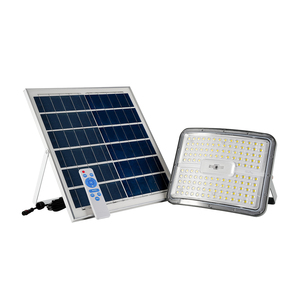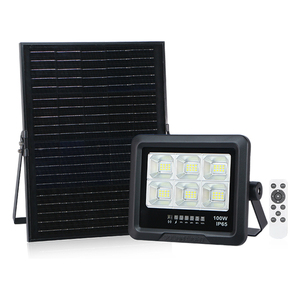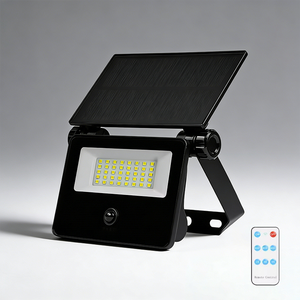
High-lumen, LiFePO4 battery-powered outdoor solar luminaires designed for highway corridors, Sonatrach energy sectors, and Algerian municipal public works.
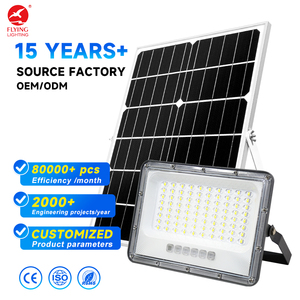
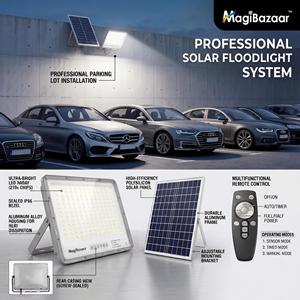
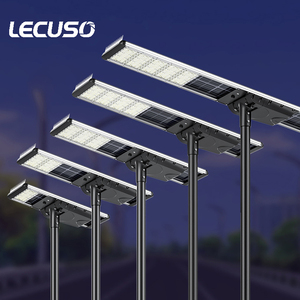
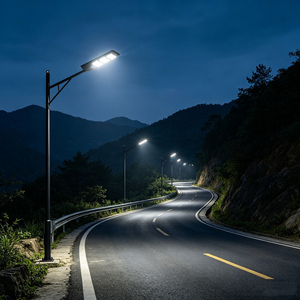
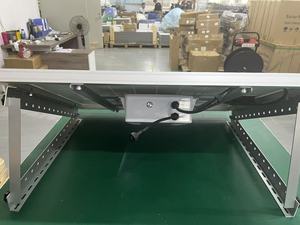
As North Africa's largest sovereign nation by landmass, the People's Democratic Republic of Algeria presents both unprecedented solar opportunities and extreme environmental challenges for commercial outdoor illumination. Driven by the national government's Plan National de Développement des Énergies Renouvelables and massive infrastructure investments led by the Ministry of Interior, Local Authorities, and Regional Planning, alongside state utility entity Sonelgaz, Algeria is transitioning rapidly toward off-grid clean energy street lighting.
However, procuring commercial solar street lights for Algerian tenders—ranging from the Mediterranean coastal urban corridors of Algiers, Oran, and Annaba to the brutal, hyper-arid Saharan expanses of Adrar, Tamanrasset, Tindouf, and Illizi—demands far more than standard off-the-shelf equipment. Algerian projects require heavy-duty, factory-engineered Lithium Iron Phosphate (LiFePO4) solar lighting systems specifically rated for severe ambient heat, fine sand silica abrasion, and high diurnal temperature swings.
Algeria boasts one of the highest solar isolation levels globally, averaging between 1,700 kWh/m²/year in the north to over 2,650 kWh/m²/year in the Southern Saharan regions, providing massive solar energy potential.
Ambient daytime temperatures in Southern provinces frequently breach +50°C, pushing internal luminaire and battery enclosure temperatures beyond +70°C. Standard batteries suffer immediate capacity collapse.
Fine sand particles (particulate size <50 microns) blown by the dry Sirocco wind create extreme abrasion, panel dust coating, and thermal trapping, demanding IP67/IP68 sealed optical engines.
In traditional solar street lighting installations across North Africa, early failures were overwhelmingly attributed to battery degradation. Conventional VRLA, GEL, and standard Ternary Lithium (NCM) chemistries experience severe capacity degradation when subjected to ambient temperatures exceeding 40°C. For every 10°C rise above 25°C, lead-acid battery service life is cut in half.
Our specialized manufacturing facility exclusively integrates Grade-A Lithium Iron Phosphate (LiFePO4) battery packs coupled with custom Intelligent Battery Management Systems (BMS) for all commercial solar street light exports destined for Algeria. LiFePO4 chemistry provides exceptional chemical structural stability, preventing thermal runaway even under direct extreme Saharan heat.
| Performance Metric | Factory LiFePO4 (Our Spec) | Standard Ternary (NCM) Lithium | Traditional GEL / Lead-Acid |
|---|---|---|---|
| Thermal Runaway Threshold | +270°C to +300°C (Ultra Safe) | +150°C to +210°C (High Risk) | +80°C (Gas Venting Risk) |
| Operating Temperature Range | -20°C to +65°C | -10°C to +45°C | -15°C to +40°C |
| Cycle Life (80% Depth of Discharge) | 4,000 to 6,000+ Cycles | 1,000 to 1,500 Cycles | 400 to 800 Cycles |
| Expected Service Lifespan in Algeria | 8 to 12 Years | 2 to 3 Years | 1 to 2 Years |
| MPPT Charge Conversion Efficiency | 98.5% Efficiency Rate | 92% to 94% | 75% to 85% (PWM) |
Engineered to meet specific municipal, industrial, and national infrastructure requirements from northern coastal highways to deep Saharan extraction fields.
Extending thousands of kilometers through remote desert terrain where utility grid connection costs are prohibitively high. Our heavy-duty 100W–300W split and integrated solar lights provide continuous 12-hour illumination with up to 5 days of rainy/cloudy autonomy for safe long-haul transport.
In high-security, hazardous industrial zones such as Hassi Messaoud and Rhourde Nouss, reliable perimeter lighting is critical. Our explosion-proof aluminum housings and anti-static PV panels resist airborne hydrocarbons and thermal degradation while providing 22,200+ lumen security perimeters.
In high-humidity, marine salt-spray zones like the Port of Algiers, Oran, and Skikda, coastal corrosion quickly destroys poor-quality steel poles. We supply double-coat anodized 6063-T6 aluminum or hot-dip galvanized poles with stainless steel hardware engineered to withstand severe marine environments.
With over 18 years of direct solar lighting manufacturing expertise and 45+ years of combined engineering capability, our manufacturing facility stands as an authoritative leader in commercial-grade off-grid solar systems. We provide Algerian project developers, EPC contractors, and government procurement agencies with complete turnkey support—from initial DIALux photometric layout simulations to containerized direct shipping.
Every solar street light fixture undergo rigorous 100% factory burn-in testing, IP68 waterproof submersion checks, and thermal chamber cycling tests to guarantee compliance before shipment to Algerian ports.
We provide complete optical simulation reports (IES files, lux maps, pole spacing optimization) tailored to Sonelgaz and Algerian Ministry of Public Works specifications, guaranteeing compliance before order placement.
Integrating top-tier Lumileds 5050/3030 LED packages delivering up to 210 lm/W fixture efficacy. Coupled with professional Type II, Type III, and Type IV optical lenses to minimize light pollution and maximize lux on target roads.
Fully autonomous solar street lighting systems eliminate costly underground cable laying, transformer station installations, and ongoing municipal electricity costs, delivering immediate ROI for Algerian municipalities.
Expert answers to common engineering, customs compliance, and installation queries from Algerian buyers and procurement specialists.
Partner with an established ISO 9001 certified manufacturer for your next Algerian commercial solar lighting project. Speak directly with our senior solar engineers for project pricing, tender specifications, and containerized freight estimates.