
Metro Manila, representing the economic epicenter of the Philippines with over 13 million inhabitants and a rapidly expanding industrial footprint across CAVITEX, NLEX, and SLEX arterial corridors, faces distinct infrastructure demands. Urban planners, commercial project managers, engineering, procurement, and construction (EPC) contractors, and Local Government Units (LGUs) are confronted with volatile grid electricity tariffs—among the highest in Southeast Asia—compounded by frequent power disturbances triggered by tropical typhoons, severe flooding, and grid congestion.
As a global pioneer in off-grid commercial solar luminaire manufacturing and export, our enterprise provides engineered lighting architectures engineered specifically for the micro-climatic and logistical challenges of the Philippine market. Utilizing high-efficiency monocrystalline PV modules, lithium iron phosphate (LiFePO4) energy storage systems, Maximum Power Point Tracking (MPPT) power electronics, and marine-grade C5-M anti-corrosion exterior coatings, our off-grid solar streetlights and floodlights deliver uninterrupted, zero-carbon exterior illumination without requiring expensive underground cabling or utility grid hookups.
Heavy-duty outdoor solar floodlights, integrated all-in-one luminaires, and modular streetlights built for high humidity, typhoons, and continuous commercial operation.
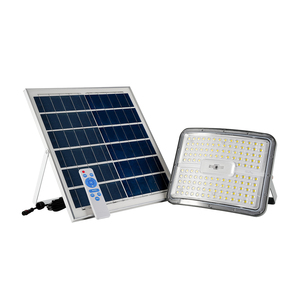
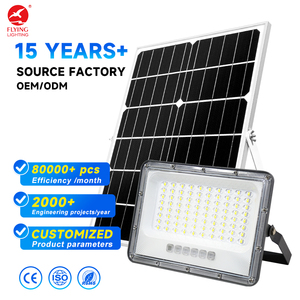
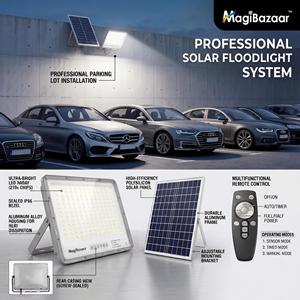
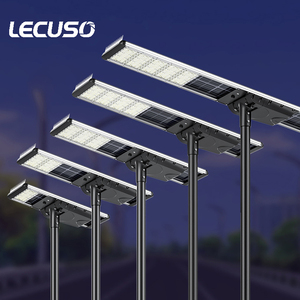
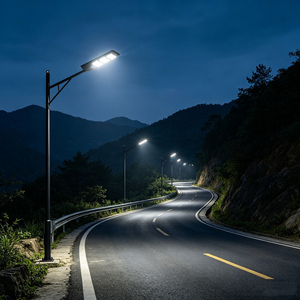
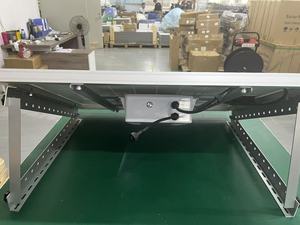
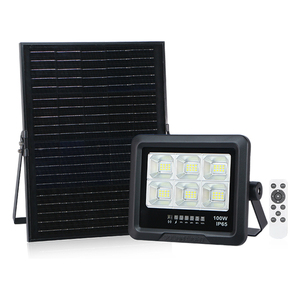
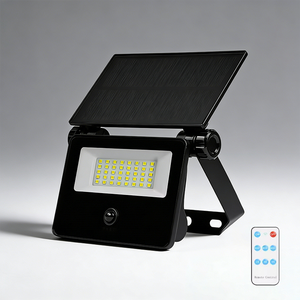
Exporting commercial off-grid solar equipment to the National Capital Region (NCR) and neighboring provinces (Bulacan, Cavite, Laguna, Rizal) requires solving three specific environmental challenges: high ambient temperature degradation, intense monsoon cloud cover, and coastal saline air oxidation. Standard off-the-shelf consumer solar lights fail rapidly under Manila conditions due to inadequate heat dissipation, sub-par PWM controllers, and low-grade battery chemistries.
During the southwest monsoon (Habagat) season from June to October, Manila experiences prolonged periods of heavy cloud cover and diffused solar radiation. Conventional Pulse Width Modulation (PWM) controllers lose up to 35% of energy harvesting capacity in cloudy conditions. Our commercial luminaires utilize military-grade MPPT controllers with tracking efficiencies exceeding 99.2%. By dynamically adjusting the input voltage and current, our systems harvest critical energy during overcast peak sun hours, guaranteeing 4 to 6 continuous days of autonomy without sunny intervals.
Ambient temperatures in urban Metro Manila regularly exceed 36°C, with internal luminaire housing temperatures reaching upwards of 65°C under direct sunlight. Standard Nickel Manganese Cobalt (NMC) batteries suffer severe thermal degradation under such stress, leading to capacity loss and premature system failure. We standardly deploy high-capacity LiFePO4 cells rated for over 4,000 deep discharge cycles at 80% DoD (Depth of Discharge). Integrated Smart Battery Management Systems (BMS) monitor cell balancing, thermal limits, and overcharge protection to ensure an operational lifecycle exceeding 10 years.
The Philippine Atmospheric, Geophysical and Astronomical Services Administration (PAGASA) regularly records Category 5 equivalent super typhoons making landfall in Luzon. Our heavy-duty stainless steel and extruded aluminum light poles and mounting brackets are wind-tunnel tested to withstand gust velocity up to 280 km/h (174 mph). Double-weld structural bases, high-tensile anchor bolts, and aerodynamic luminaire geometries prevent structural resonance and mechanical shear stress.
Understand the technical benchmarks that separate high-reliability industrial off-grid solar luminaires from entry-level commercial units in the Manila market.
| Performance Feature | Standard Import Solar Luminaire | Our Industrial Off-Grid Luminaire (Manila Spec) | Strategic Advantage |
|---|---|---|---|
| Solar Charge Controller | PWM Controller (Efficiency ~65-70%) | Ultra-Fast MPPT Controller (>98.5% Efficiency) | +30% Charging Speed |
| Battery Chemistry | Ternary NMC / Reclaimed Li-ion | Grade-A EV-Class LiFePO4 (4,000+ Cycles) | 10+ Year Operational Life |
| Luminous Efficacy | 90 - 110 lm/W (Standard LED) | 190 - 220 lm/W (Philips Lumileds 5050) | Double Lux Output |
| Corrosion Resistance | Basic Powder Coating (Rusts in 12 mos) | Marine-Grade C5-M Anodized / Stainless Steel | Manila Bay Resistant |
| Rain/Overcast Autonomy | 1 - 2 Nights Maximum | 5 - 7 Nights Intelligent Dimming Autonomy | Zero Blackout Risk |
| Wind Load Capacity | 120 km/h Rated Brackets | 280 km/h Super Typhoon Engineering | PAGASA Category 5 Compliant |
Built to deliver enterprise-grade performance, low operational expenditure, and immediate compliance with Philippine green building and municipal standards.
Tailored deployment blueprints engineered for high-density urban developments, logistics gateways, and off-grid commercial properties.
24/7 Business Process Outsourcing (BPO) centers require continuous perimeter, walkway, and parking lot illumination for employee safety during night shifts.
High-density container yards, freight terminals, and distribution centers require ultra-bright floodlighting to support nighttime logistics operations.
Extending illumination to secondary provincial access roads and remote toll plazas where grid extensions are economically unfeasible.
Eco-resorts and off-grid hospitality developments requiring clean energy aesthetics and absolute power self-sufficiency.
The acceleration of off-grid commercial solar lighting adoption in the Philippines is anchored by three critical macro drivers:
1. Escalating Power Utility Rates: Power tariffs supplied by MERALCO and provincial electric cooperatives are subject to global fuel price volatility. Commercial enterprises switching to off-grid solar lighting insulate their balance sheets from future rate hikes, turning exterior lighting from an operational expense into a depreciable capital asset with predictable cash flows.
2. Government Decarbonization Directives & Green Building Codes: Under the Renewable Energy Act (RA 9513) and the Philippine Green Building Code, new commercial complexes and industrial park developments in Metro Manila must integrate renewable energy solutions. Installing solar streetlights directly contributes to LEED points and BERDE (Building for Ecologically Responsive Design Excellence) certification.
3. Disaster Risk Reduction & Management (DRRM) Priorities: Local Government Units across Metro Manila are mandated under RA 10121 to build climate-resilient infrastructure. Off-grid solar lighting systems serve as crucial lifeline infrastructure during natural disasters, ensuring emergency response routes, evacuation centers, and public parks remain illuminated when the main power grid collapses.
Clear answers to technical, commercial, and logistical inquiries raised by Philippine EPC contractors, project developers, and procurement agents.
Our off-grid solar lighting systems are specifically engineered for tropical rainy zones. By pairing high-efficiency monocrystalline solar panels with MPPT smart controllers and oversized LiFePO4 battery banks, our systems store sufficient energy to maintain 5 to 7 consecutive nights of continuous illumination during complete cloudy overcast conditions. Integrated adaptive dimming profiles automatically optimize power output to prevent blackout risk.
Yes. Every luminaire housing, bracket assembly, and structural light pole shipped to the Philippine market is mathematically modeled and certified to withstand sustained wind speeds of 250 km/h and gusts up to 280 km/h (174 mph). We utilize high-tensile hot-dip galvanized steel or extruded 6063-T6 aluminum alloys accompanied by heavy-duty steel anchor foundation bolts designed to meet Philippine National Structural Code (NSCP) standards.
For coastal and port installations within 5 kilometers of saltwater environments (such as Manila South Harbor, Pasay Bay Area, or Subic Bay), we supply luminaires treated with marine-grade C5-M anti-corrosion polyester powder coating. Key hardware components, fasteners, and bracket joints are constructed from 316 stainless steel, preventing rust and chemical degradation caused by saline air.
Standard production for commercial volume orders takes approximately 12 to 18 business days. Transit time via direct container vessel from our factory port to Manila South Harbor or Manila North Harbor typically takes 7 to 12 days. We provide full export documentation including Certificate of Origin (Form E for ATIGA duty-free tariff preferential treatment), Bill of Lading, Packing List, and CE/RoHS/ISO test reports for rapid customs clearance.
Absolutely. We assist local EPC contractors and LGUs by providing comprehensive DIALux photometric reports tailored to specific road widths, pole spacings, and mounting heights. Our engineered optical lenses deliver Type II, Type III, or Type IV road light distribution patterns compliant with DPWH standards for Class A, B, and C municipal roadways.
We back our commercial systems with a comprehensive 3-to-5 year complete warranty covering solar panels, LED modules, MPPT controllers, and LiFePO4 battery packs. Structural light poles carry up to a 15-year warranty. In the event of a warranty claim, replacement modules are dispatched rapidly via regional express courier to minimize system downtime.
With nearly two decades of continuous innovation, ISO 9001:2015 quality assurance certification, and installations spanning 6 continents, our enterprise stands as a trusted export manufacturing partner for Manila's premier commercial developers, municipal planners, and infrastructure contractors.
Whether you require standard integrated solar streetlights for a real estate project in Cavite, heavy-duty 500W floodlights for a container terminal in Manila Port, or custom-engineered hurricane-resistant solar light poles for DPWH highway tenders, our engineering team delivers end-to-end support—from initial photometric layout to factory-direct bulk delivery.