
High-efficiency, MPPT-controlled, and LiFePO4 battery-powered commercial solar luminaires tailored for Hamburg's rigorous municipal and industrial standards.
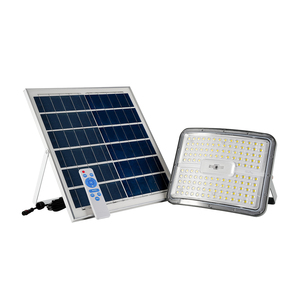

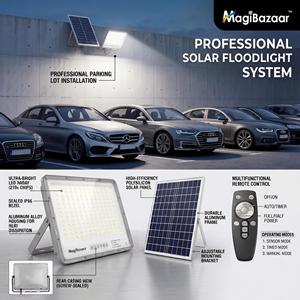
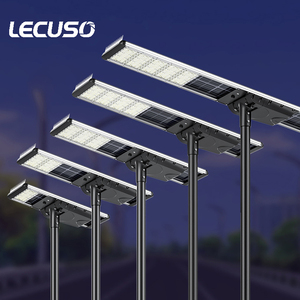
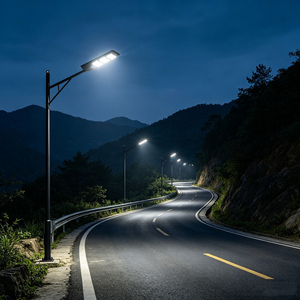
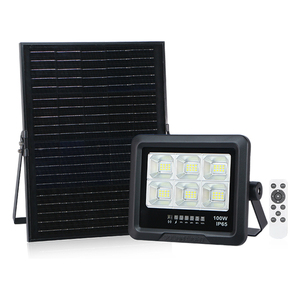
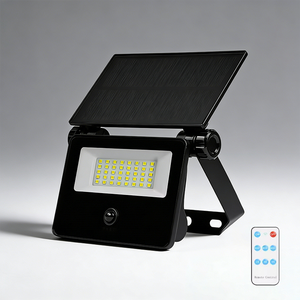
As Northern Germany accelerates its municipal energy transition (Klimaplan Hamburg) toward absolute carbon neutrality, the deployment of self-sustaining, IoT-enabled solar lighting has evolved from an environmental alternative into a core infrastructure strategy. Operating off-grid outdoor lighting at 53.55° N latitude demands uncompromising engineering precision, advanced photovoltaic (PV) capture, and intelligent energy management designed to survive harsh maritime winter conditions.
Hamburg presents a unique microclimate for outdoor solar deployments. Characterized by low winter solar irradiance, high wind speeds off the North Sea, frequent storm surges (Sturmflut) along the Elbe, and dense corrosive salt spray within the Port of Hamburg (Hafen Hamburg), standard commercial lighting components quickly succumb to micro-cracking, water ingress, and battery degradation. As a premier global supplier and exporter of heavy-duty commercial solar street lights, our systems integrate grade-A monocrystalline PV modules, Maximum Power Point Tracking (MPPT) logic, high-capacity Lithium Iron Phosphate (LiFePO4) storage, and robust LoRaWAN/NB-IoT smart node connectivity engineered specifically for demanding Northern European environments.
Advanced Maximum Power Point Tracking algorithms maintaining over 98.5% conversion efficiency under diffuse Northern European winter cloud cover.
Long-life lithium iron phosphate cells with built-in thermal management systems engineered for multi-day autonomy in freezing winter conditions (-20°C to +65°C).
Heavy-duty anodized 6063-T6 aluminum and 316 stainless steel housings compliant with ISO 12944 C5-M marine exposure standards for coastal port zones.
Seamless integration with Hamburg’s municipal IoT infrastructure via LoRaWAN, NB-IoT, and DALI-2 protocols for dynamic centralized dimming control.
A primary challenge for EPC contractors and municipal urban planners in Hamburg is mitigating severe seasonal solar irradiance swings. In June, Hamburg receives an average solar irradiation of approximately 5.2 kWh/m²/day, whereas in December, solar insolation drops to under 0.7 kWh/m²/day. Conventional fixed-panel off-grid lights frequently experience winter blackout conditions unless designed with tailored mathematical modeling.
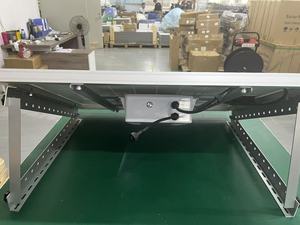
To deliver guaranteed 365-night zero-downtime performance compliant with German DIN EN 13201 roadway lighting standards, our Hamburg-bound systems employ a 2.8:1 PV-to-Load oversizing ratio coupled with customized 35° to 45° steep-tilt mounting brackets. This steep angle maximizes winter sun capture when the solar elevation is low while actively shedding coastal snow, ice, and atmospheric particulate buildup.
Furthermore, our integrated systems leverage ultra-high lumen efficacy LED engines powered by Philips Lumileds 5050 chips, delivering up to 210 lumens per watt (lm/W). By pairing high-output LED chips with programmable adaptive dimming profiles (e.g., 100% illumination during peak evening traffic hours, auto-dimming to 30% with radar motion override during low-traffic overnight hours), system power consumption is reduced by up to 65% without compromising public safety.
From modern urban redevelopments to critical industrial infrastructure, specialized smart grid solar street lighting fulfills severe operational requirements across the Hamburg metropolitan region (Metropolregion Hamburg).
High-mast solar floodlighting systems installed across logistics yards in Altenwerder, Steinwerder, and Waltershof. Designed with C5-M marine anti-corrosion protection and IP66 sealing to resist continuous saltwater aerosols, diesel particulates, and severe coastal storm winds.
Architectural All-In-One solar poles integrated into public plazas and waterfront walkways along the Elbe River. Outfitted with Dark-Sky compliant optical distributions to protect maritime wildlife and prevent light spill into adjacent residential lofts.
High-lumen autonomous roadway luminaires deployed along industrial logistics corridors (e.g., Harburg, Wilhelmsburg). Eliminates millions of Euros in grid trenching and cable laying while satisfying DIN EN 13201 ME3-ME5 roadway lighting classes.
A rigorous Total Cost of Ownership (TCO) evaluation demonstrates why municipal procurement leaders in Northern Germany are transitioning from traditional AC grid-connected lighting to autonomous smart grid solar infrastructure.
| Evaluation Criteria | Traditional Grid LED Lighting | Standard Commercial Solar Light | Our Industrial Smart Solar System |
|---|---|---|---|
| Civil Works & Trenching | High Costs (€120 - €250 per linear meter) | Zero (Self-contained) | Zero (Plug-and-play installation) |
| Hamburg Winter Autonomy | N/A (Grid dependent) | 1 - 2 Days (Risk of winter blackouts) | 5 - 7 Days (Oversized PV + MPPT logic) |
| Corrosion Resistance | Standard C3 Powder Coating | Basic Anodization (C3/C4) | ISO 12944 C5-M Marine Grade Coating |
| Smart City Integration | Requires external hardwired PLC | Standalone / Non-networked | Native LoRaWAN / NB-IoT / CMS Connectivity |
| Designed Service Lifespan | 10 Years (Driver failure prone) | 3 - 5 Years (Standard Lead/LiCoO2) | 20+ Years System / 10+ Yr LiFePO4 Battery |
| Energy Operational Cost | Continuous Electricity Tariff Exposure | €0.00 Grid Consumption | €0.00 Grid Consumption + Carbon Offset |
Commercial lighting installations in Hamburg must navigate strict German and European Union regulatory Frameworks. Procurement teams must ensure compliance across three core pillars:
1. DIN EN 13201 Standards for Roadway Illumination: German street lighting regulations dictate strict parameters for average luminance ($E_{av}$), overall uniformity ($U_0$), and disability glare restrictions ($TI$). Our engineered optical lenses utilize asymmetrical Type II, Type III, and Type IV distributions to achieve precise beam placement, preventing wasteful light scatter while hitting compliance thresholds across all municipal road classifications.
2. Dark-Sky & Biodiversity Regulations (Schutz der Nacht): In alignment with Northern German environmental mandates aimed at reducing light pollution along the North Sea migratory bird corridors, our fixtures support zero-upward-light emission (ULOR = 0%) and feature optional amber LED spectrum switching (2200K - 2700K) to protect local wildlife ecosystems.
3. Smart Grid & Central Management Systems (CMS): Hamburg is a recognized European leader in Smart City implementation. Our smart solar lighting systems integrate standard Zhaga / NEMA sockets capable of accepting municipal IoT controllers. Through an open-API cloud dashboard, operators can remotely monitor battery state-of-charge (SoC), track ambient temperatures, analyze energy harvesting curves, and dynamically modify dimming schedules across thousands of light poles in real time.
Every manufacturing step adheres to strict international quality management protocols, ensuring zero-defect manufacturing for high-stakes municipal tenders.
Our lighting application engineers generate full 3D DIALux photometric reports and structural wind load analytics (up to 180 mph) prior to project execution.
Direct supply-chain agreements ensure seamless sea-freight container delivery directly to the Port of Hamburg (HHLA terminals) with complete EU customs clearance docs.
Our systems are specifically engineered for high-latitude regions. By pairing oversized monocrystalline solar panels with high-efficiency MPPT charge controllers and high-capacity LiFePO4 batteries, we guarantee 5 to 7 days of continuous nighttime operation even under prolonged overcast or rainy winter weather in Northern Germany.
Yes. Luminaires intended for maritime and port environments are treated with an ISO 12944 C5-M marine-grade anti-corrosion powder coating. The hardware consists of marine 316 stainless steel, and all enclosures carry IP65/IP66 waterproof ingress ratings.
Absolutley. Our solar smart street lights can be outfitted with standardized NEMA or Zhaga 7-pin receptacles and LoRaWAN or NB-IoT controllers, allowing them to communicate natively with Hamburg's Central Management Systems (CMS) for real-time diagnostics and dimming.
Yes. We provide complete DIALux lighting calculations tailored to your roadway geometry. Our engineered optical lenses deliver uniform light distribution ($U_0 \ge 0.40$) and control glare to fully satisfy DIN EN 13201 classes ME3 through ME6 and S1 through S4.
Our Grade-A Lithium Iron Phosphate (LiFePO4) batteries provide over 6,000 deep discharge cycles at 80% DoD. Under typical Northern European operational conditions, the battery pack yields a operational service life of 10 to 12 years, while the LED luminaire and solar panel are rated for 20 to 25 years.
We provide comprehensive engineering support, including photometrics, wind resistance verification, mounting pole structural design, compliance certificates (CE, RoHS, ISO 9001:2015), and customized container shipping options directly to your job site or warehouse in Hamburg.
Partner with an established global manufacturer and exporter of commercial-grade solar street lighting. Contact our engineering team today for technical data sheets, DIALux simulation files, and direct wholesale pricing.