
Heavy-duty, high-lumen solar floodlights, perimeter security luminaires, and integrated solar street lights engineered for Japanese industrial logistics, open-pit quarrying, and aggregate stockpiles.
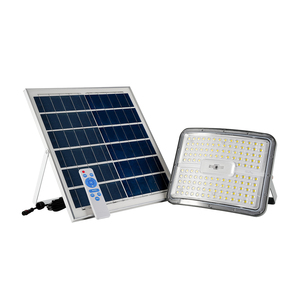
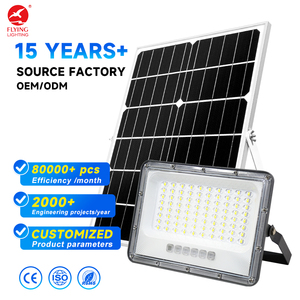
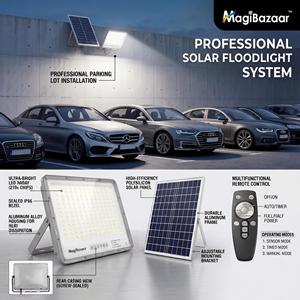
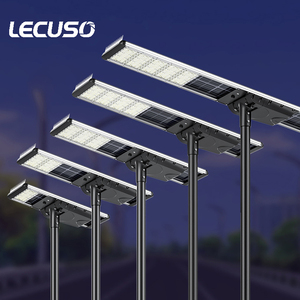
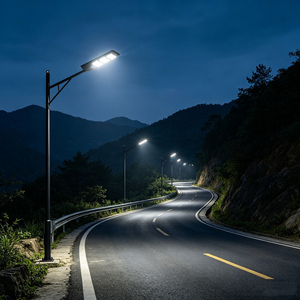
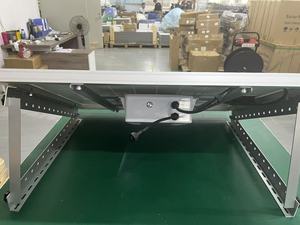
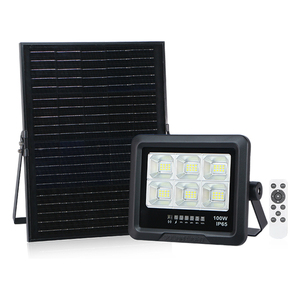
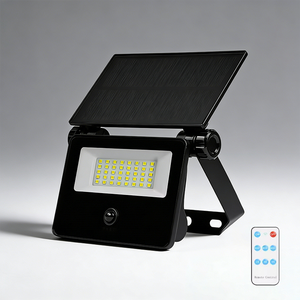
The extraction of mineral resources in Japan—ranging from high-purity limestone quarries in Fukuoka and Iwate to silica sand operations, gold mines in Hokkaido, and coastal aggregate dredging hubs—presents one of the most demanding operating environments for industrial outdoor lighting. Mine managers, safety engineers, and engineering, procurement, and construction (EPC) contractors across Japan encounter severe microclimates, stringent safety mandates under the Industrial Safety and Health Act, and aggressive national targets for decarbonization (GX / Green Transformation).
As a global manufacturing exporter specializing in commercial and industrial solar lighting architectures since 2006, our engineering firm delivers specialized solar mining site lighting systems tailored specifically for the Japan market. By eliminating reliance on diesel generator tail-trailers, trenching, and grid wiring in rugged topographical terrain, solar floodlights and integrated streetlights supply autonomous, zero-carbon illumination engineered to withstand seismic shocks, severe winter snowfall, high atmospheric moisture, and typhoon-force coastal winds.
Utilizing high-efficiency monocrystalline solar panels with conversion rates exceeding 22.5%, maximum photovoltaic output is achieved even during low-irradiance winter days in northern Honshu and Hokkaido.
Integrated Lithium Iron Phosphate batteries equipped with autonomous heating elements allow continuous charge/discharge cycles in extreme temperatures ranging from -30°C to +65°C without capacity degradation.
Engineered with heavy-duty structural steel and marine-grade anodized aluminum alloy (6063-T6), rated to withstand wind speeds up to 180 mph (80 m/s) conforming to Japanese structural load guidelines.
Operating mining sites in Japan require localized lighting configurations designed to meet specific geological and logistical constraints. Below are four primary deployment scenarios where autonomous solar lighting systems deliver critical operational efficiency and risk mitigation:
Operational Challenge: Extreme cold temperatures (-20°C to -30°C), heavy snow accumulation on solar panels, and short winter daylight hours.
Solar System Solution: High-angle tilt monocrystalline panels (60° snow-shedding angle) combined with dual-panel high-lumen floodlights (500W equivalent) and internal battery thermal jackets to guarantee 36-hour autonomous operation during heavy blizzards.
Operational Challenge: Intense mechanical vibration caused by 50-ton dump trucks, heavy dust, and dynamic movement of extraction zones requiring zero-trenching infrastructure.
Solar System Solution: Integrated All-in-One and Stainless Steel 300W solar street lights mounted on anti-seismic damped poles. Microwave radar sensors detect approaching heavy machinery, transitioning luminaires from 30% standby to 100% full illumination.
Operational Challenge: High salt spray corrosion, humidity, and tropical typhoons along the Pacific Coast and Sea of Japan.
Solar System Solution: IP68 sealed die-cast aluminum luminaires with electro-coat powder coating, marine-grade 316 stainless steel fasteners, and ultra-wide asymmetric optics to illuminate loading barges without causing optical glare to maritime traffic.
Operational Challenge: Continuous 24/7 security monitoring around quarry perimeters to prevent unauthorized entry and ensure compliance with Japanese environmental and safety mandates.
Solar System Solution: GUOHUI TG3AP 50W MPPT-controlled security floodlights paired with remote timing control and continuous low-lux night illumination for clear CCTV camera recording.
| Performance Parameter | Traditional Diesel Light Towers | Grid-Tied Mining Floodlights | SLI Advanced Solar Mining Systems |
|---|---|---|---|
| Installation Cost | Low Initial Purchase / High Operating Fuel | Extremely High (Trenching & Cabling) | Zero Trenching / Modular Deployment |
| Fuel & Maintenance OPEX | ¥120,000–¥180,000 / month / unit | Utility Electricity Costs | ¥0 Operating Fuel / Low Maintenance |
| Carbon Footprint (CO2) | High Emissions (Disqualified under GX) | Grid Dependent (Varies by Power Source) | 100% Zero-Emission (METI GX Compliant) |
| Typhoon & Seismic Resilience | High Center of Gravity (Prone to Overturning) | Vulnerable Underground Cable Ruptures | 80 m/s Wind Rated + Anti-Vibration Dampers |
| Operational Autonomy | Requires Daily Refueling | Fails During Grid Power Outages | 3 to 5 Days Continuous Autonomy (MPPT) |
Japan's Ministry of Economy, Trade and Industry (METI) has accelerated its Green Transformation (GX) blueprint, compelling industrial operators and mining conglomerates (such as Mitsubishi Materials, Sumitomo Metal Mining, and Nittetsu Mining) to aggressively reduce Scope 1 and Scope 2 carbon emissions. Furthermore, the Ministry of the Environment's Light Pollution Guidelines demand strict control over light trespass (upward light output ratios near zero) to protect regional ecosystems and nearby agricultural communities.
Replacing a single 1000W metal-halide diesel light tower with an integrated 300W solar LED mining light reduces carbon dioxide emissions by approximately 4.8 metric tons annually, qualifying Japanese mining enterprises for ESG tax incentives and green capital subsidies.
Our luminaires feature precision-engineered asymmetric glass lenses meeting Dark-Sky compliance. Light is directed precisely onto haul roads and pit walls with 0% upward light spill, eliminating glare for heavy excavator operators and adhering to JIS standards.
Every solar lighting assembly undergoes stringent factory acceptance testing (FAT), including thermal cycling, ingress protection validation (IP65/IP68), salt spray testing, and vibration testing prior to containerized export to Japanese ports (Yokohama, Kobe, Moji).
Equipped with intelligent MPPT controllers supporting customizable dimming profiles (e.g., 100% output during active shift hours, dimming to 30% with radar motion override during low-traffic hours), extending battery operational autonomy up to 7 consecutive rain days.
Since 2006, our manufacturing organization has supplied high-reliability outdoor solar lighting systems for demanding commercial, municipal, and industrial applications across 6 continents. With over 45 years of combined solar engineering expertise, our team bridges global manufacturing excellence with local Japanese site specifications.
Before procurement, our lighting engineers provide custom DIALux photometric calculations, mapping lux levels, uniformity ratios, and optimal pole spacing for your specific mine site topography.
We utilize high-grade aluminum and steel poles backed by a Lifetime Structural Warranty, combined with Philips Lumileds LED chips and MPPT charge controllers for a 20-year overall design life.
Our direct export department handles custom packaging, sea freight documentation, import tariff clearance, and localized technical support for Japanese importers and EPC general contractors.
Answers to technical, operational, and regulatory questions commonly raised by Japanese mining engineers and procurement managers.
Our northern-tier solar lighting systems utilize Grade-A LiFePO4 battery packs equipped with an integrated BMS thermal heating pad. When ambient temperatures drop below 0°C, the solar controller directs a portion of incoming solar energy to warm the battery compartment to optimal charging levels before initiating the charge cycle. Furthermore, solar panels are mounted at a steep 55°–60° tilt angle to ensure automatic snow shedding.
Yes. All structural poles, brackets, and luminaire housings are computer-modeled and stress-tested to withstand wind speeds of up to 180 mph (80 m/s), exceeding standard Japanese typhoon resistance thresholds. High-tensile steel anchor bolts and heavy-duty 6063-T6 aluminum alloys ensure zero structural degradation under severe dynamic wind loads.
Our luminaires feature hydrophobic and anti-static glass coatings on solar panels to prevent fine silica and limestone dust accumulation. Standard maintenance involves an annual inspection of mounting hardware and periodic visual panel wiping. Because the systems are completely off-grid, there are no underground cables or transformers to service.
We supply specialized asymmetric Type II and Type III optical light distributions. By directing 100% of emitted light forward and downward onto the roadway or pit perimeter, glare is eliminated from the direct sightline of truck drivers and excavator operators, enhancing site safety in accordance with Japanese occupational safety guidelines.
Standard manufacturing and factory testing take approximately 14–21 business days following engineering approval. Sea freight from our manufacturing hub to major Japanese ports (Yokohama, Kobe, Osaka, Nagoya) typically takes 7–12 days. Air freight options are available for emergency mine site expansions.
Yes. Our manufacturing facilities operate under ISO 9001:2015 certified quality systems. Products meet CE, RoHS, IP65/IP68, and JIS testing standards. Detailed technical documentation, bill of materials (BOM), and photometric reports are provided for Japanese customs clearance and METI compliance reporting.
Request our comprehensive 2026 Commercial Solar Mining Lighting Systems Catalog, technical datasheets, and custom DIALux photometric simulation service for your Japanese project.