
Explore our top-tier export range of solar-powered warning floodlights, integrated perimeter safety units, and industrial LED traffic fixtures engineered for continuous 24/7 reliability in demanding African solar radiation environments.
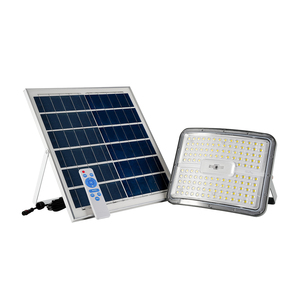
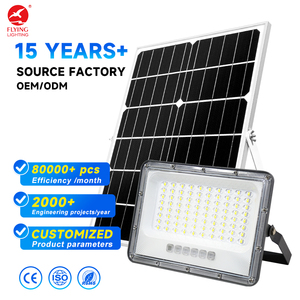
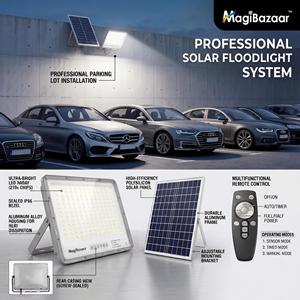
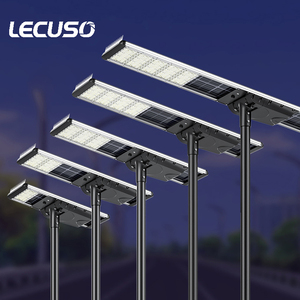
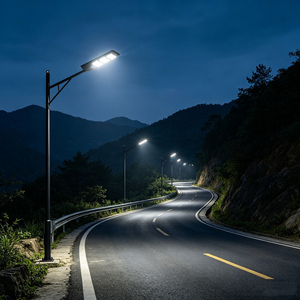
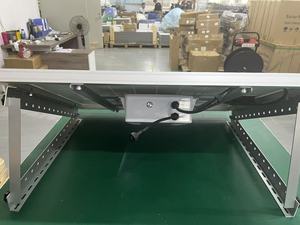
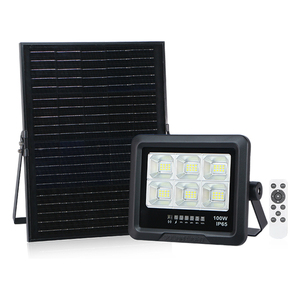
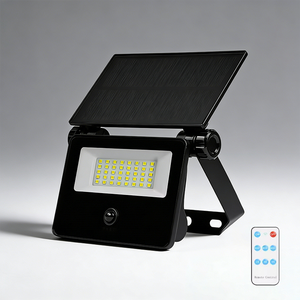
Deploying traffic safety infrastructure in West Africa demands rigorous thermal management, dust-proofing against the Harmattan trade winds, and high-efficiency photovoltaic harvesting capable of delivering uninterrupted operation during prolonged cloud cover.
During the dry season in Nigeria, fine particulate dust blown from the Sahara (Harmattan) coats optical lenses and photovoltaic surfaces. Our solar crosswalk lights utilize double-gasketed IP66 and IP67 sealed polycarbonate and aluminum enclosures with hydrophobic, anti-static glass coatings to minimize dust adhesion and maintain peak lux output without frequent washing cycles.
Ambient temperatures in northern Nigerian hubs like Kano or Maiduguri frequently exceed 40°C, causing conventional Lithium-ion or Lead-acid batteries to degrade rapidly. We integrate thermal-stabilized Lithium Iron Phosphate (LiFePO4) cell chemistry managed by intelligent BMS circuitry, supporting reliable charge-discharge cycles at ambient working temperatures up to 65°C for over 3,000 cycles (10+ years operational life).
Equipped with Maximum Power Point Tracking (MPPT) charge controllers, our warning systems harvest up to 30% more energy during diffuse sunlight conditions than legacy PWM units. Paired with high-efficacy Philips Lumileds LED arrays and EN 12966 compliant optical beam angles, our crosswalk beacons project high-intensity warning signals visible over 800 meters under bright sunlight.
| Technical Parameter | Export-Grade Crosswalk Warning System (Our Standard) | Generic Commercial Off-the-Shelf Lights |
|---|---|---|
| Battery Chemistry | EV-Grade LiFePO4 (Lithium Iron Phosphate) with Active BMS | Standard Ternary Li-ion or VRLA Gel Batteries |
| Operating Temperature | -20°C to +65°C Thermal Endurance | 0°C to +45°C (Accelerated capacity loss under extreme heat) |
| Solar Controller Technology | Smart MPPT (Efficiency >= 98.5%) with Night-Sensors | Standard PWM Controller (Efficiency ~70%) |
| Enclosure Protection & Coating | Die-Cast ADC12 Aluminum + Marine Powder Coating (IP66/IP67) | Basic ABS Plastic or Thin Sheet Metal (IP65 max) |
| Wind Load & Structural Rating | Engineered to withstand 180 mph (80 m/s) wind loads | Unrated or maximum 90 mph wind load capacity |
| Photometric Compliance | EN 12966 / MUTCD Pedestrian Warning Flashing Standards | Non-regulated general illumination optical patterns |
From dense megacity pedestrian corridors to unlit inter-state trunk roads, our customized solar traffic lights directly solve local infrastructure hurdles created by grid instability and high vehicle speeds.
In high-density transit zones like Ikorodu Road, Lekki-Epe Expressway, and Oshodi Interchange, high vehicular throughput combined with heavy pedestrian foot traffic presents severe safety challenges. Our solar-powered dual-flashing crosswalk lights offer continuous, self-sustained warning signals that function entirely off-grid. Independent of PHCN / DisCo power outages, these units provide zero-downtime safety for urban commuters.
Abuja’s multi-lane expressways (such as the Umaru Musa Yar'Adua Expressway and Nnamdi Azikiwe Expressway) witness elevated travel speeds where drivers require early hazard notification. Installing solar warning beacons and microwave-radar-triggered pedestrian signals provides high-intensity, long-range illumination, giving motorists ample distance to decelerate before designated pedestrian crossings.
Industrial corridors in Port Harcourt, Warri, and Calabar handle heavy oil tanker and logistics traffic along coastal, high-humidity roads. Our stainless steel and marine-grade aluminum solar lights withstand high moisture, salt fog, and heavy downpours, offering robust perimeter illumination and warning signals near refinery checkpoints, port gates, and industrial parks.
Inter-state highways connecting hubs like Ibadan, Enugu, Kaduna, and Kano often lack electrical grid connection for hundreds of kilometers. Rural school zones located along these expressways pose high risks to children. Self-contained all-in-one solar warning lights require no costly cable trenching or power connections, allowing state governments and public works contractors to rapidly install warning systems in isolated locations.
The Federal Road Safety Corps (FRSC) and the Federal Ministry of Works have intensified focus on reducing pedestrian casualties on federal trunk roads. Government tenders increasingly mandate autonomous solar-powered warning systems to eliminate reliance on unreliable grid infrastructure, driving double-digit annual growth for certified solar traffic safety equipment.
With rising diesel costs for backup generators and persistent utility grid shedding, Nigerian municipalities, state agencies, and private developers are switching to off-grid solar infrastructure. Solar crosswalk lights eliminate ongoing utility billing and diesel fuel costs while guaranteeing 100% uptime during national grid collapses.
Modern Nigerian civil tenders are prioritizing smart infrastructure. Motion-activated microwave radar traffic lights brighten only when pedestrians approach, conserving battery energy while delivering an undeniable visual cue to approaching vehicles. Remote monitoring capabilities enable centralized status tracking across expansive road networks.
Backed by nearly two decades of commercial solar lighting development, we deliver factory-direct engineering, customized photometric designs, and rigorous quality assurance for major international infrastructure programs.
Our manufacturing facilities operate under strict ISO 9001:2015 quality management systems. Engineered in accordance with global standards, our complete solar assemblies integrate tier-1 monocrystalline panels, heavy-duty structural steel, and industry-leading electronic components engineered for a 20-year design life.
We provide full photometric lighting simulations tailored to your specific highway layout or pedestrian crosswalk geometry prior to procurement. Municipal engineers and EPC contractors can review exact lux levels, uniformity ratios, and coverage maps before placing bulk orders.
To address equipment tampering risks in public corridors, our solar traffic warning lights feature internal tamper-proof battery housing elevated high on the structural pole, anti-vandalism mounting hardware, and impact-resistant polycarbonate optical lenses.
Yes. All our solar crosswalk warning lights, LED traffic signals, and solar energy storage systems comply with the Standards Organisation of Nigeria Conformity Assessment Programme (SONCAP). We provide Product Certificates (PC) and Certificate of Conformity (CoC) to ensure seamless customs clearance through the Nigeria Customs Service at Apapa, Tin Can, or Port Harcourt ports.
Our systems are explicitly engineered for high ambient environments. We utilize Grade-A LiFePO4 battery cells with thermal management BMS circuitry rated for operation up to +65°C. Additionally, our monocrystalline solar panels are equipped with low temperature-coefficient bypass diodes, minimizing power output loss even under extreme heat in regions like Kano, Sokoto, and Maiduguri.
Our standard crosswalk warning systems are designed with a minimum of 3 to 5 rainy days of operational autonomy (over 60 hours of continuous operation without solar recharge). Coupled with smart MPPT controllers that adjust light intensity during low-charge periods, the system guarantees 100% warning sign availability year-round.
Safety equipment in high-traffic corridors is protected via anti-theft hardware design. The LiFePO4 battery is either integrated directly inside the sealed LED light engine casing or mounted inside a lockable, high-elevation pole box accessed only with specialized key tools. Anchor bolts feature shear-off anti-tamper nuts.
We offer a standard 3-to-5 year complete system warranty on our solar crosswalk units, while our aluminum and galvanized structural poles carry a Lifetime Warranty. We also stock plug-and-play replacement LED modules, MPPT controllers, and solar panels for fast air-freight dispatch to support maintenance contracts.
Production lead time for standard commercial orders ranges from 10 to 15 business days. Maritime container shipping from our factory to Lagos (Apapa/Tin Can) or Port Harcourt typically takes 30 to 40 days. Air freight options are available for urgent emergency road maintenance tenders (5 to 8 days transit).
Equip your Nigerian road projects, municipal tenders, and commercial developments with high-visibility, heavy-duty solar traffic safety solutions. Contact our engineering team today for photometric design support, SONCAP documentation, and competitive factory-direct quotes.