
Engineered with ultra-bright optical arrays, high-efficiency MPPT controllers, and rugged IP65/IP67 housings to ensure maximum visual alert effectiveness across Korean expressways, ports, and construction sites.
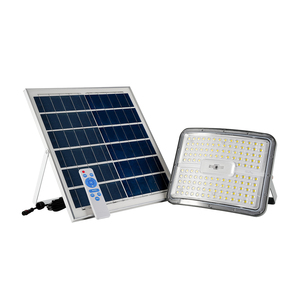
Heavy-duty remote-controlled perimeter hazard light featuring programmable timing, multi-mode strobe signaling, and high-capacity LiFePO4 battery pack.
Inquire Now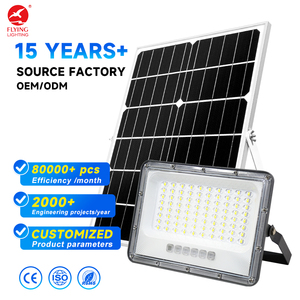
Integrated Microwave Radar motion & proximity sensor flood beacon. Auto-switches from low lumen standby to full emergency alert upon vehicle detection.
Inquire Now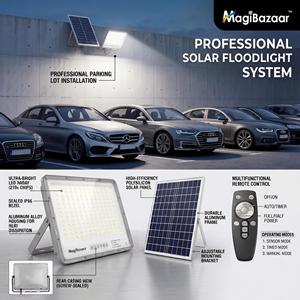
Industrial grade ultra-bright warning light array with corrosion-resistant die-cast aluminum chassis. Built for marine ports and logistics hub perimeter safety.
Inquire Now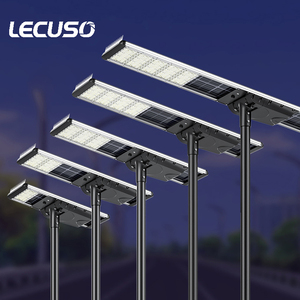
Streamlined solar hazard signaling unit combining monocrystalline solar module, smart controller, and high-intensity optical LED lenses in a single housing.
Inquire Now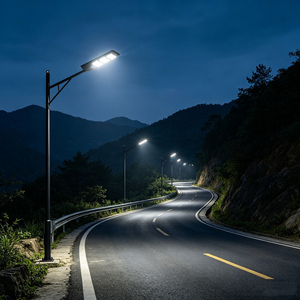
Grade 316 stainless steel housing engineered specifically for extreme salt spray along South Korea's coastal expressways and island bridge crossings.
Inquire Now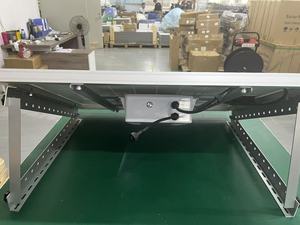
Ultra-fast MPPT tracking system delivering 99.2% solar conversion efficiency even during South Korea's overcast rainy monsoon (Jangma) season.
Inquire Now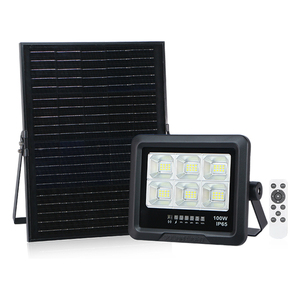
Designed for heavy highway construction zones, civil engineering diversions, and railway crossing safety alerts. Includes multi-flash frequency settings.
Inquire Now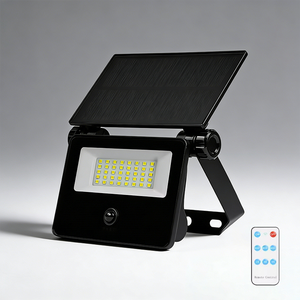
High-impact polycarbonate housing with magnetic mounting base. Essential for rapid-deployment emergency responders, maintenance crews, and industrial sites.
Inquire NowSouth Korea’s rapid infrastructure modernization, stringent regulatory frameworks enforced by the Ministry of Land, Infrastructure and Transport (MOLIT / 국토교통부), and demanding environmental conditions necessitate a specialized paradigm in solar hazard flashing beacon manufacturing. As a premier original equipment manufacturer (OEM) and exporter, Solar Lighting International (SLI) designs purpose-built solar-powered warning lights, traffic warning flasher systems, and emergency obstruction signals tailored to meet the strict technical standards of the Korean market.
Deploying solar hazard beacons in South Korea requires addressing two extreme environmental vectors: severe sub-zero winter temperatures in mountainous provinces like Gangwon-do (dropping below -20°C to -25°C) and extreme coastal typhoons combined with high atmospheric salt density along maritime logistics hubs such as Busan, Incheon, and Yeosu. Standard commercial off-the-shelf solar warning lights frequently fail under these conditions due to lithium battery thermal degradation, moisture ingress, or mechanical failure caused by high wind shear.
Custom optical beam spread optics providing 360-degree horizontally uniform light dispersion and wide vertical viewing angles. Flash frequencies adjustable to match Korea National Police Agency (KNPA) traffic signalization rules (50 to 70 flashes per minute).
Grade-A LiFePO4 (Lithium Iron Phosphate) battery enclosures equipped with automated micro-heating films. Ensures reliable charge acceptance and flash discharge down to -25°C without system shutdown during harsh winter spells.
Engineered with smart MPPT algorithm tracking and ultra-high-efficiency monocrystalline PV panels. Guarantees 7 to 10 days of continuous 24/7 operational autonomy even during South Korea's prolonged overcast summer monsoon (장마).
Our solar hazard flashing beacons are specifically configured for turnkey integration into South Korea’s diverse geographical and municipal infrastructure sectors:
Along major arterial routes such as the Gyeongbu Expressway (Route 1) and Yeongdong Expressway (Route 50), heavy traffic volume demands high-visibility hazard warning signals. SLI solar flashing beacons are mounted on temporary crash barriers, lane diversion barricades, and maintenance vehicles to prevent high-speed rear-end collisions. Portable, magnetic-mount 360-degree amber beacons provide instant deployment for emergency crews under Korea Express Corporation guidelines.
The mountainous terrain of Gangwon Province and the Taebaek Mountain Range experiences severe black ice (블랙아이스) formation and heavy fog. Solar hazard beacons integrated with road temperature sensors automatically activate high-intensity amber flashing alerts when conditions fall below freezing. Self-contained solar power eliminates the exorbitant cost of running utility lines up remote alpine mountain passes.
In coastal logistics powerhouses like Busan Port, Incheon International Airport Cargo Terminal, and Ulsan Industrial Complex, heavy machinery and container gantry cranes operate 24/7. Stainless steel (STS 316) body solar hazard beacons resist intense salt fog while highlighting overhead crane clearance hazards, perimeter security zones, and dangerous chemical transfer docks.
South Korea leads global urban innovation in smart cities like Songdo International Business District and Pangyo Techno Valley. SLI solar hazard beacons feature optional IoT communication modules (supporting LTE-M, LoRa, and NB-IoT). They sync directly with Cooperative Intelligent Transport Systems (C-ITS) to transmit wireless hazard alerts directly to connected and autonomous vehicle navigation systems.
Under South Korea’s enforced Min-sik Law (민식이법) and expanding "Silver Zones" for elderly protection, school zone crossings demand eye-level and elevated solar flashing beacons. High-lumen solar yellow/amber LED flashers mounted on crosswalk warning signs alert approaching drivers in dense urban areas like Seoul and Busan, significantly boosting pedestrian safety metrics.
Procurement directors and civil engineering contractors in South Korea are prioritizing four key technological trends when specifying solar powered safety products:
Analyze how SLI industrial solar powered hazard beacons outperform conventional hazard signal systems under Korean operational mandates:
| Performance Specification | Generic Commercial Solar Flasher | Conventional Grid/Battery Beacons | SLI Industrial Solar Hazard Beacon (Korea Spec) |
|---|---|---|---|
| Battery Chemistry & Life | Standard Li-ion / Lead-Acid (1-2 Yrs) | External Lead-Acid (Requires Frequent Swap) | Grade-A LiFePO4 with BMS (10+ Year Life / 4000 Cycles) |
| Low Temp Tolerance | Fails below -5°C (Battery Cutoff) | Capacity Drops 50% at 0°C | Operates seamlessly down to -25°C with Auto-Heated Cells |
| Solar Charge Controller | Basic PWM (70% Efficiency) | N/A (Grid Tied or Manual Battery Change) | Advanced Smart MPPT Controller (99.2% Tracking Efficiency) |
| Housing Material & Protection | Abs Plastic / IP63 Rated | Standard Painted Steel / IP65 | STS 316 Stainless Steel or Anodized Aluminum / IP67 & IK10 |
| Typhoon Wind Load Resistance | 30 m/s (Failure in Mild Storms) | Varies by Pole Mount | Rated for 60 m/s (Extreme Typhoon Category 4/5 Resistance) |
| Monsoon Autonomy (No Sunlight) | 2 to 3 Days Maximum | Requires Daily Battery Swap | 7 to 10 Days Continuous 24/7 Autonomy (Jangma Proof) |
| Regulatory Compliance | Basic CE Only | Local Electrical Code Only | KC Certification Ready, ISO 9001:2015, MOLIT Compliant Optics |
Solar Lighting International, Inc. (SLI) stands as a globally recognized manufacturer of commercial-grade solar lighting, solar light poles, solar parking lot lights, and solar traffic safety solutions since 2006. With over 45 years of combined solar engineering experience, our technical team delivers complete end-to-end support for Korean engineering firms, government agencies, and industrial importers.
Our manufacturing facilities adhere to rigorous international quality management systems. Every solar hazard beacon undergoes 100% factory burn-in testing, thermal chamber cycling (-30°C to +70°C), and water ingress pressure testing before export dispatch.
We provide Korean civil engineering contractors with comprehensive Dialux photometer simulation reports, wind load structural calculations, and solar autonomy verification prior to contract signing, ensuring 100% tender specification compliance.
We utilize high-efficacy Philips Lumileds LED chips (delivering up to 22,200 lumens per fixture), ultra-pure Monocrystalline PV panels, and heavy-duty structural aluminum/steel poles carrying a Lifetime Warranty against structural defect.
Answers to common technical, legal, and operational inquiries from Korean importers, civil engineering firms, and municipal project managers.
In South Korea, electronic devices imported for infrastructure projects must comply with the Korea Certification (KC) mark requirements for Electromagnetic Compatibility (EMC) under National Radio Research Agency regulations. Furthermore, solar hazard beacons deployed in public works are evaluated against KS C 8565 (Solar Photovoltaic Modules) and KS D 3503 standards for structural mountings. All SLI solar hazard beacons feature IP67/IP68 ingress protection and IK10 impact resistance testing reports, streamlining local KC certification testing for Korean importers.
South Korea’s Jangma season brings 2 to 3 consecutive weeks of dense overcast skies and heavy precipitation. SLI solar beacons integrate oversized monocrystalline solar panels paired with high-precision MPPT (Maximum Power Point Tracking) algorithms. This configuration maximizes energy harvesting from indirect ambient light, providing 7 to 10 days of complete 24/7 continuous operation without requiring supplementary grid power or battery replacement.
Standard lithium batteries suffer severe capacity loss and permanent damage when charged below 0°C. SLI hazard beacons engineered for the Korea market utilize Grade-A LiFePO4 cells wrapped in an automated thermistor-controlled heating blanket. When ambient temperatures drop below 0°C, solar energy is first routed to internal heating elements to maintain the battery enclosure at an optimal temperature zone (5°C to 15°C) before initiating the charge cycle.
Yes. MOLIT guidelines mandate specific luminous intensity, chromaticity coordinates (Amber, Red, Blue, White), and flash patterns for temporary road works and dangerous curve warning lights. SLI solar beacons feature programmable microcontrollers capable of delivering single flash, double flash, revolving pulse, or steady burn patterns adhering precisely to Korean traffic safety manual specifications.
Absolutely. SLI offers IoT-ready solar controllers equipped with RS485 / Modbus interfaces and modular cellular expansion slots. Korean system integrators can easily install local LTE-M or Cat-M1 IoT modems connected to KT, SK Telecom, or LGU+ networks. This enables remote centralized monitoring of battery state-of-charge, solar charging current, ambient temperature, and automated light outage alarms across national highway networks.
Typhoons originating in the Pacific regularly hit South Korea’s southern coastline with wind gusts exceeding 50 to 60 m/s. SLI solar hazard beacons feature marine-grade extruded aluminum alloy housings (6063-T6) and heavy-duty stainless steel (STS 316) hardware. Structural mounting brackets are FEA-calculated to withstand wind velocities up to 60 m/s (approx. 134 mph), preventing structural shear or optical displacement during extreme storm events.
SLI provides full B2B support for Korean engineering procurement companies bidding on public sector contracts via KONEPS. We supply complete CAD engineering drawings, photometric Dialux simulation files, factory ISO 9001 certificates, mill test reports for metals, and official warranty letters. Furthermore, we offer custom OEM branding, labeling, and specialized Korean-language installation manuals.
SLI industrial solar hazard beacons are engineered for a designed operational life of 10 to 12 years. The monocrystalline solar modules carry a 25-year linear performance output warranty. The LiFePO4 battery pack is rated for 4,000 cycles (approx. 10 years of daily charge/discharge), and light poles come with a Lifetime Warranty against structural defects. Standard complete system warranty coverage spans 3 to 5 years with direct factory component replacement support.
You can initiate a technical consultation or request a custom quotation by clicking the "Inquire Now" button located on any product card or in the call-to-action banner below. Our international sales engineering division responds within 24 hours to review your project specifications, photometric requirements, and sample evaluation schedules for the Korean market.
Partner with an ISO 9001:2015 certified solar hazard beacon manufacturer. Access specialized engineering specs, sub-zero battery technology, and competitive factory-direct export pricing tailored for Korean civil tenders.