
Deploying commercial outdoor lighting in the Republic of Peru demands a sophisticated understanding of localized geography, atmospheric dynamics, and extreme climatic variance. Spanning three distinct geographic zones—the arid coastal desert (Costa), the rugged high-altitude Andes mountain range (Sierra), and the dense Amazonian rainforest (Selva)—Peru poses environmental challenges that quickly compromise conventional single-source solar lighting systems.
Along Peru's 2,414-kilometer Pacific coast, including metropolitan Lima, Callao, Chimbote, and Trujillo, a phenomenon known as the Garúa dominates from May through October. Driven by the cold Humboldt Current, continuous low-altitude stratocumulus clouds create persistent coastal mist, overcast skies, and an ambient solar irradiance loss of up to 65%.
Standard solar-only street lights frequently suffer from severe battery starvation during these five continuous months, leading to premature low-voltage disconnects (LVD) and total municipal darkouts. Hybrid Solar-Wind Street Light Systems resolve this fundamental vulnerability. During winter months when solar yield drops, coastal thermal pressure gradients generate consistent, predictable breeze profiles (speeds ranging from 4.5 m/s to 12 m/s), allowing integrated vertical-axis wind turbines (VAWT) to generate electricity continuously through the night and cloudy daylight hours.
In Peru’s interior regions such as Cusco, Puno, Huancayo, and major mining corridors like Cerro Verde, Antamina, and Las Bambas, lighting equipment operates at elevations exceeding 3,500 to 4,500 meters above sea level. This high-altitude context introduces three critical failure modes:
Top tier Chinese manufacturing partners servicing Peruvian contracts utilize specialized grade-A LiFePO4 (Lithium Iron Phosphate) battery cells coupled with internal BMS thermal heating wraps, marine-grade aluminum alloy heat sinks (ADC12), and UV-stabilized optical PMMA lenses rated for 20-year field longevity under intense Andean solar radiation.
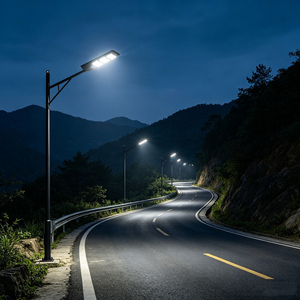
Stretching across coastal desert routes like Panamericana Norte and Sur. High-output 150W–300W hybrid street lights utilize aerodynamic horizontal or vertical wind turbines to harness coastal breeze corridors, delivering continuous Type II/III beam distributions with 0% blackout rates year-round.
Off-grid mining logistics camps in Cajamarca, Ancash, and Arequipa requires zero-maintenance security lighting. Heavily reinforced IP67 stainless steel luminaire bodies housing wide-temp LiFePO4 batteries withstand high winds, hail, and extreme thermal cycling down to -15°C.
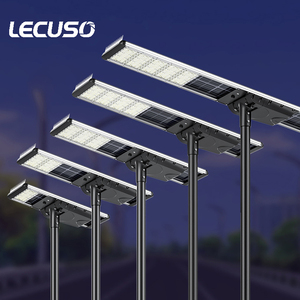
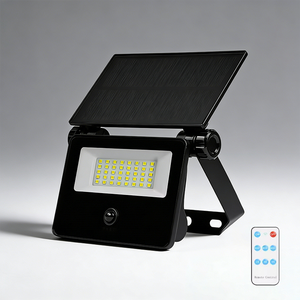
City plazas, public boulevards, and waterfront walkways in Miraflores, San Isidro, and Callao. Aesthetic integrated All-In-One solar luminaires feature smart motion sensing, automated dimming curves, and remote telemetry via IoT LoRaWAN modules for municipal energy management.
Remote river ports and community centers in Loreto and Ucayali along the Amazon and Ucayali Rivers. Moisture-sealed tropicalized luminaires with conformal-coated PCB driver circuits prevent humidity ingress and fungus growth under 95%+ relative humidity conditions.
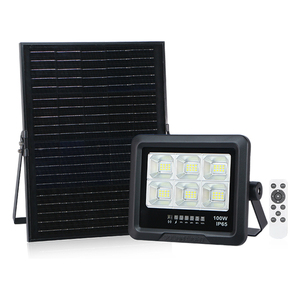
Heavy industrial shipping zones and container yards. High-bay 500W solar flood lights with marine-grade anti-corrosion anodized coating withstand constant saline mist, heavy diesel exhaust, and severe structural vibration from heavy crane machinery.
The Paracas region experiences severe dust storms and sudden gust velocities exceeding 25 m/s (Paracas wind storms). Luminaires engineered with low-drag coefficient maglev vertical wind turbines convert violent gusts into reliable battery charging energy without mechanical strain.
To ensure complete alignment with Peruvian public tenders (OSCE) and industrial engineering norms, Chinese OEM factories offer customized modular configurations based on site-specific solar insolation ($kWh/m^2/day$) and average wind velocity ($m/s$).
| Peruvian Target Region | Dominant Environmental Factor | Optimal Solar PV Type | Wind Turbine Configuration | Battery & BMS Standard | Protection Rating |
|---|---|---|---|---|---|
| Lima / Callao Coast | Dense Garúa Fog / Overcast | Monocrystalline PERC (23.5% Eff.) | Vertical Axis (VAWT) 300W-500W | LiFePO4 with Deep Discharge BMS | IP66 / Anti-Saline C5-M |
| High Andes (Cusco/Puno) | Sub-Zero Temps / High UV | High-Bifacial Glass PV Panel | Low Cut-In Speed HAWT 200W | LiFePO4 + Thermo-Wrap Heating Pad | IP67 / IK10 Vandal-Proof |
| Paracas / Ica Desert | Extreme Wind Gusts & Sand | Tempered Anti-Reflective Solar Glass | Maglev Aerodynamic VAWT 500W | High-Temperature Stable LiFePO4 | IP67 Sealed Dust-Tight |
| Amazon Basin (Iquitos) | Tropical Rain / 95% Humidity | Anti-Fungus Hydrophobic PV Coating | Optional / Solar Focus Primary | Conformal Sealed LiFePO4 Pack | IP68 Waterproof Junctions |
State-of-the-art Chinese hybrid controllers utilize simultaneous Maximum Power Point Tracking (MPPT) for both solar PV panels and wind turbines. With peak conversion efficiency reaching 98.8%, the system dynamically prioritizes energy yield depending on real-time solar irradiance and wind rpm.
Leading factories provide complete photometric simulation files (.IES) for Peruvian municipal tender compliance, ensuring precise lux distribution, uniform luminance compliance (IESNA/AASHTO), and zero light pollution (IDA Dark-Sky compliance). Poles are structural wind tunnel tested up to 150 km/h.
Established suppliers manage direct container shipments from Ningbo, Shenzhen, or Shanghai ports to Puerto del Callao. Detailed support for Peruvian customs tariff codes (HS 9405.40), SUNAT Tax clearance, and INACAL quality verification compliance documentation.
Request a comprehensive factory quote, custom DIALux lighting design, or technical specification sheet for your upcoming Peruvian municipal, mining, or highway infrastructure tender.