
Explore our heavy-duty outdoor solar floodlights, all-in-one smart street luminaires, and winter-optimized highway solar systems configured for Swedish solar zenith angles and freezing temperatures.
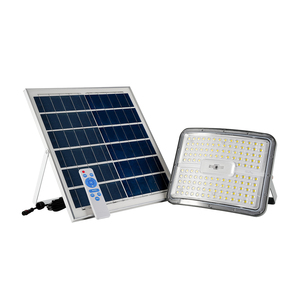
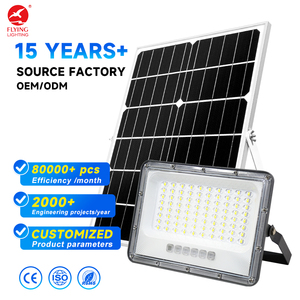
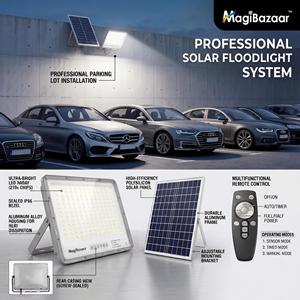
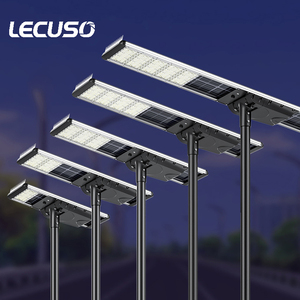
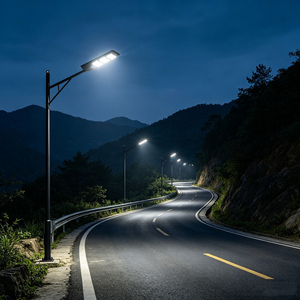
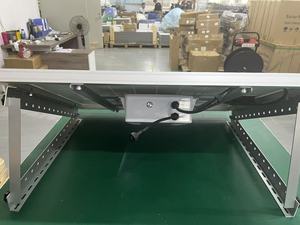
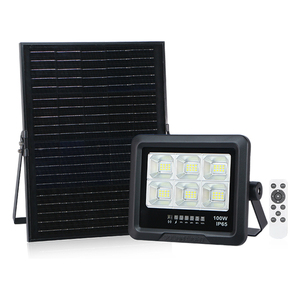
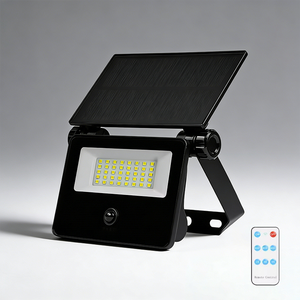
Customized solar street lighting systems designed to overcome Sweden's unique geographic and climatological hurdles, from Stockholm's urban perimeter to Lapland's polar night conditions.
Sweden’s extensive highway networks require high-output luminance under dark winter skies. Our 300W stainless steel solar street lights utilize high-efficiency optic lenses meeting EN 13201 Class M3/M4 requirements, eliminating costly grid trenching across remote Swedish terrain.
Cities like Gothenburg and Malmö prioritize green, safe public pathways. Our integrated all-in-one solar luminaires feature microwave motion sensors and warm 3000K CCT LEDs that activate to 100% brightness upon pedestrian detection, preserving energy while respecting nocturnal wildlife.
In Northern Sweden (Kiruna, Luleå), extended winter dark periods demand exceptional autonomy. Systems equipped with thermal self-heating LiFePO4 battery enclosures and bi-facial TOPCon panels harvest both direct sun and ground-reflected snow light (Albedo effect) for zero-downtime operation.
Corrosive marine environment protection (C5-M coating) combined with IK10 impact protection ensures long-term operational integrity across Gothenburg Port and eastern Baltic harbors subject to salt spray, heavy ice storms, and high wind velocity up to 45 m/s.
Why standard solar street lights fail in Nordic winters and how our specialized China manufacturing technology provides a robust solution.
Designing municipal solar street lighting systems for Sweden requires a complete departure from standard equator-centric solar configurations. Between November and February, Sweden experiences drastically reduced peak sun hours (ranging from 0.5 to 1.8 hours daily in Southern Sweden to continuous polar nights in the north). Furthermore, the solar elevation angle drops as low as 6 degrees, causing traditional horizontal solar panels to collect virtually no radiation while becoming buried under dense snow loads.
To overcome these severe environmental constraints, our engineering team has developed the Nordic-Spec Thermal Management & Photometric Architecture, incorporating four key technical innovations:
| Engineering Parameter | Standard Tropical Solar Light | China Export Nordic-Spec Solar System |
|---|---|---|
| Battery Chemistry & BMS | Standard LiFePO4 (Cut-off at 0°C) | PTC Heating Pack LiFePO4 (Operational to -35°C) |
| Solar Panel Tilt Angle | Fixed 15° – 25° Horizontal | Adjustable 55° – 65° Vertical Mount (Snow Self-Shedding) |
| Solar Cell Technology | PERC Monocrystalline (20.5% Efficiency) | N-Type TOPCon Bifacial Glass-Glass (>23.5% Efficiency) |
| Autonomy Period | 2 – 3 Days Continuous Overcast | 7 – 10 Days Smart Dimming Autonomy (EN 13201 Safe) |
| IoT Protocol Support | Basic Infrared Remote / Standalone | NEMA / Zhaga Book 18 Receptacle with LoRaWAN / DALI-2 |
| Corrosion Resistance | C3 Standard Powder Coating | C5-M Heavy Marine Anodized Aluminum / Stainless Steel |
By leveraging high-tilt panel geometry, snow-shedding hydrophobic glass treatments, and N-type TOPCon bifacial cell technology, our solar street lighting arrays harvest up to 25% additional indirect solar radiation reflected off surrounding snow cover (Albedo effect). When combined with intelligent MPPT charging algorithms that track solar irradiance micro-bursts during overcast winter days, our municipal light fixtures achieve non-stop continuous operation year-round.
Key technology drivers and municipal policy frameworks shaping public illumination projects across Sweden.
Swedish municipalities (Kommuner) are operating under strict carbon-neutral infrastructure directives. Off-grid solar street lighting directly reduces municipal grid electricity consumption while bypassing lengthy grid-connection permits and cable installation costs in protected natural areas.
Swedish urban planners are demanding standardized IoT sockets (ANSI C136.41 NEMA 7-pin or Zhaga Book 18). Our solar street light luminaires come equipped with standardized top-mounted sockets, allowing plug-and-play installation of LoRaWAN or NB-IoT smart city management nodes.
Mitigating light pollution is a major priority in Nordic environmental stewardship. Our luminaires incorporate full-cutoff asymmetric optics (0% upward light ratio) and customizable 2700K–3000K warm LED CCT to prevent disruption to local Scandinavian wildlife and astronomy reserves.
Technical answers for Swedish municipal engineers, energy consultants, and electrical contractors procuring solar street lighting systems from China.
Our municipal solar lighting systems use dynamic MPPT controllers pre-programmed with dynamic dimming profiles (e.g., 100% brightness during peak traffic hours, scaling to 30% with motion sensor activation overnight). Combined with oversized Grade-A LiFePO4 battery reserves and N-Type TOPCon panels mounted at steep 60° angles, the systems provide up to 10 days of continuous lighting without direct sun exposure.
We install thermally insulated battery chambers equipped with automated PTC (Positive Temperature Coefficient) micro-heating elements. When internal temperatures drop below 0°C, a portion of daytime solar energy is dynamically routed to warm the battery compartment to optimal charging temperatures before charging initiates, preventing lithium plating and preserving cell life for over 10 years.
Yes. All exported municipal luminaires comply fully with EN 13201 (Performance Requirements for Road Lighting), EN 60598-2-3 (Luminaires for Road and Street Lighting), CE, RoHS, and ISO 9001:2015 certified quality control standards. Complete Dialux photometric simulation files (.IES / .LDT) are provided for municipal engineering verification prior to contract signing.
By mounting solar panels at high tilt angles (55° to 65°), heavy snow naturally slides off the smooth, tempered glass surface. Additionally, our panel covers feature a durable hydrophobic and anti-sooting coating that minimizes ice adhesion, keeping the solar cell surface clear even during wet freezing conditions.
Yes. The light poles, brackets, and luminaire housings are structural engineering tested for wind gusts up to 45 m/s (162 km/h). Structural components utilize hot-dip galvanized Q235/Q345 steel or heavy-duty die-cast aluminum coated with fluorocarbon marine paint rated for C5-M high-salinity coastal environments.
We provide a comprehensive 5-year standard warranty on complete solar street light systems (including solar panel, LED engine, BMS controller, and battery pack) and up to 20 years on structural light poles. Spare parts are packaged in modular plug-and-play formats for fast on-site maintenance by municipal technicians.
Why leading global engineering contractors and Swedish municipal buyers partner with our state-of-the-art China manufacturing facility.
Our modern manufacturing base spans over 35,000 square meters, operating automated SMT lines, automated battery sorting systems, and integrating rigorous 100% burn-in test protocols for every outgoing municipal batch.
Our senior optical engineering department delivers precise 3D Dialux lighting simulations tailored to Swedish roadway dimensions, pole heights, and spacing—ensuring zero light wastage and perfect uniformity (U0 > 0.40).
We strictly utilize Grade-A LiFePO4 cells from CATL/BYD, high-efficacy Philips Lumileds 5050 LED chips (up to 210 lm/W), and patented ultra-fast MPPT controllers designed for maximum conversion efficiency in cold conditions.
Extensive experience exporting directly to Swedish ports (Gothenburg, Stockholm, Helsingborg) with complete customs documentation, CE declaration of conformity, and DDP/FOB contract flexibility.
Partner with China's premier engineering manufacturer of high-performance municipal solar street lighting systems. Contact our engineering team today for custom Dialux photometry reports, technical specifications, and factory-direct price quotes for your Swedish projects.