
High-lumen industrial grade solar illumination systems designed for Indian municipal tenders, expressways, industrial SEZs, and rural electrification programs.
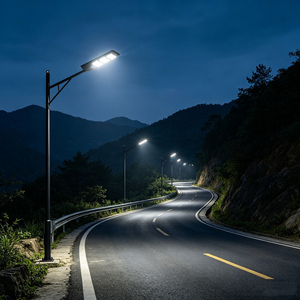
An in-depth evaluation of vertical 360-degree cylindrical solar wrapping technology vs traditional tilted flat solar panels under extreme tropical climatic stresses.
Across the Indian subcontinent, municipal authorities, National Highways Authority of India (NHAI) concessionaires, Smart City SPVs, and industrial site operators encounter significant operational failure rates with traditional flat-panel solar street lights. The root causes stem from three distinct environmental factors: high airborne particulate soiling (PM10/PM2.5), severe cyclonic wind loads in coastal belts, and extreme summer thermal degradation reaching 50°C+ ambient temperatures.
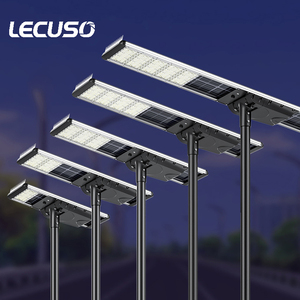
Vertical Solar Pole Lighting Systems solve these challenges by integrating flexible, ultra-high-efficiency monocrystalline solar panels vertically wrapped 360 degrees around hexagonal or octagonal galvanized steel poles. This structural shift alters the thermodynamics, mechanics, and energy harvesting efficiency of solar lighting systems.
In high-dust regions such as Rajasthan, Delhi-NCR, Gujarat, and industrial transport corridors, flat solar panels inclined at standard tilt angles (15° to 30°) suffer up to a 40% reduction in power output within 30 days due to heavy dust, ash, and particulate accumulation. Dust particles rest permanently on flat surfaces without high-velocity rain scrubbing.
Conversely, a vertical solar pole positions solar cells at a 90-degree vertical orientation. Gravity naturally prevents dust, sand, and atmospheric debris from adhering to the sleek glass/flexible PV surface. Furthermore, during the Indian monsoon season, vertical panels receive dynamic self-cleaning from rainfall coming at multi-directional wind angles, maintaining peak irradiance absorption without requiring manual cleaning crews.
The comparative matrix below details why leading Indian EPC contractors and municipal agencies are transitioning to vertical wraparound pole architectures for commercial projects:
| Engineering Metric | Vertical Cylindrical Solar Pole | Traditional Flat-Panel Solar Street Light |
|---|---|---|
| Dust & Dustfall Accumulation | Near Zero (90° Vertical Gravity Shedding) | High (Heavy Soiling at 15°-30° Tilt Angle) |
| Aerodynamic Drag ($C_d$) | Low Drag Coefficient ($C_d \approx 0.5-0.6$) | High Sail Effect & Wind Resistance ($C_d \ge 1.2$) |
| Vandalism & Theft Resistance | High (Integrated seamlessly onto pole shaft) | Low (Exposed top panels vulnerable to stone throwing/theft) |
| Architectural Aesthetic Integration | Sleek, Modern, Architectural (Smart City Standard) | Bulky, Cluttered Industrial Appearance |
| 360° Light Capture Efficiency | Captures East Morning & West Afternoon Sun Equally | Single Direction Optimization (Peak only at Solar Noon) |
| LiFePO4 Battery Thermal Life | Encapsulated inside pole base (Protected from direct overhead thermal heat) | Top-mounted battery box subjected to extreme solar radiation heat soak |
Customized engineering configurations tailored for India's distinct geographical, infrastructure, and climatic operational requirements.
Ideal for Smart City initiatives in Delhi, Bengaluru, Mumbai, Surat, and Lucknow. Integrated with IoT NEMA/Zhaga sockets for Central Management Software (CMS) control, automated adaptive dimming, real-time power analytics, and zero footprint installation without grid trenching.
Engineered for coastal states including Kerala, Konkan Railway line, Goa, Tamil Nadu, Andhra Pradesh, and Odisha. Built with C5-M marine anti-corrosion hot-dip galvanization and IP67 sealed housings to resist saltwater spray, high relative humidity (up to 98%), and intense tropical storms.
Deployed extensively in manufacturing hubs like GIDC Gujarat, MIDC Maharashtra, SIPCOT Tamil Nadu, and RIICO Rajasthan. Delivers continuous, flicker-free illumination across expansive industrial freight corridors, warehousing zones, and heavy manufacturing perimeters.
Perfect alignment with PM-KUSUM and rural development tenders. Provides self-sustained zero-electricity-bill lighting for remote villages, agricultural bypass roads, and off-grid Gram Panchayat community centers without requiring costly grid sub-station expansion.
Features IDA Dark-Sky compliant optical distributions, warm 3000K-4000K CCT spectrum options, and heavy-duty tamper-proof security construction for Indian Cantonment zones, naval bases, civil airport perimeters, and ASI-protected national heritage monuments.
High-lumen batwing distribution lenses engineered to meet NHAI multi-lane illumination safety standards. Minimizes glare for high-speed vehicular traffic while ensuring uniform illuminance across toll approach lanes and highway interchanges.
Critical technical standards, Bureau of Indian Standards (BIS) norms, and material innovations driving commercial procurement decisions.
Indian municipal and public sector tenders strictly enforce Bureau of Indian Standards (BIS) certification (IS 16102 / IS 10322) and Ministry of New and Renewable Energy (MNRE) guidelines. High-spec vertical solar poles incorporate certified components ensuring full compliance for central government and state-level tenders.
With summer ambient temperatures in Northern and Central India regularly crossing 45°C to 50°C, legacy Lead-Acid and basic NCM Lithium batteries suffer rapid capacity degradation or thermal runaway. Modern vertical solar systems utilize Grade-A LiFePO4 (Lithium Iron Phosphate) cells with thermal isolation inside the pole base structure, rated for over 4,000 charge cycles at high temperatures.
Indian Smart Cities are mandating IoT integration via 4G/NB-IoT or LoRaWAN communication protocols. Vertical solar poles house internal smart controllers that allow municipal engineers to remotely dim lighting levels during low-traffic hours (1:00 AM - 4:00 AM), monitor battery state-of-health, and receive automated fault alerts on a centralized dashboard.
During monsoon seasons characterized by intermittent cloud cover and low solar irradiance, conventional PWM controllers lose up to 35% of harvested energy. Intelligent Maximum Power Point Tracking (MPPT) algorithms track peak voltage dynamically, maintaining energy conversion efficiencies above 98% even under overcast skies.
Expert responses addressing tendering rules, technical compliance, installation physics, and long-term warranties for Indian projects.
Split-type solar street lights feature flat overhead PV panels inclined at fixed tilt angles. In Indian industrial regions and dust-heavy states like Rajasthan, Haryana, and UP, airborne particulate matter rapidly creates a dense dust layer over flat glass, cutting power harvest by up to 40%. Vertical cylindrical panels stand vertically at 90 degrees, allowing gravity to clear dust naturally and keeping the PV surface free of heavy accumulation without frequent manual cleaning.
Yes. Our commercial vertical solar lighting systems are engineered in full alignment with MNRE specifications and BIS standards (including IS 16102 for LED luminaire safety and performance, and IS 10322 for outdoor weatherproofing). System components come with full testing reports required for submission in Indian government EPC tenders.
Traditional flat panels act like solar sails, creating enormous aerodynamic uplift and drag forces during high wind events. Vertical cylindrical solar modules wrap around the structural pole, offering a round aerodynamic cross-section with a dramatically lower drag coefficient ($C_d \approx 0.5-0.6$). Rated according to Indian structural wind loading standard IS 875 (Part 3), our systems withstand extreme gust speeds up to 180 km/h (50 m/s).
We exclusively utilize premium LiFePO4 (Lithium Iron Phosphate) battery chemistry paired with intelligent BMS protection. Unlike standard lithium-ion or lead-acid batteries that degrade rapidly or pose fire hazards above 40°C, LiFePO4 retains thermal stability up to 65°C. Placing the battery inside the lower section of the steel pole or underground protects it from direct solar radiation heat-soak, extending operational lifespan beyond 10+ years (4,000+ deep cycles).
Absolutely. Each luminaire can be equipped with a standardized 7-pin NEMA or 4-pin Zhaga Book 18 socket. This allows plug-and-play installation of cellular NB-IoT, LoRaWAN, or Wi-SUN smart controllers, enabling central monitoring, automated fault detection, geolocation mapping, dynamic scheduling, and energy consumption reporting for smart city operations centers.
Our sales engineering team provides full Dialux photometric simulations tailored to your exact road width, pole spacing, height, and lux requirements (e.g., NHAI highway standards or municipal M1/M3 lighting classes). We furnish IES files, structural pole calculations, and complete bill of materials (BOM) documentation for tender submissions.
Over 18 years of pioneering commercial solar illumination solutions for demanding international environments.
Established in 2006, our company has manufactured and deployed tens of thousands of commercial solar street lights, vertical solar poles, and traffic safety systems across 6 continents. Our senior engineering leadership brings over 45 years of combined solar technology expertise.
Our manufacturing infrastructure operates under stringent ISO 9001:2015 quality management system protocols. Every component—from monocrystalline solar cells to MPPT controllers and die-cast aluminum light heads—undergoes rigorous multi-stage QA testing prior to dispatch.
We utilize high-efficacy Philips Lumileds LED chips delivering up to 210 lumens per watt, paired with batwing optical distribution lenses. This optimizes inter-pole spacing, reduces overall pole count requirements, and lowers total project capital expenditures for contractors.
We do not just sell hardware; we deliver engineered illumination solutions. Our engineering department supplies full Dialux layout simulations, wind load calculations, solar irradiation modeling, and customized electrical configurations for Indian infrastructure projects.
Connect with our senior engineering team for customized vertical solar pole specifications, tender documentation, and direct factory pricing for the Indian market.