
Autonomous, zero-grid emergency flashing beacons engineered for municipal fire departments, EMS egress corridors, industrial facilities, and smart city transportation networks. Designed for 100% operational uptime during extreme weather events and grid failures.
When emergency apparatus exit fire stations, hospital driveways, or military bases, immediate optical warning to approaching motorists is critical to prevent fatal collisions. Hardwired emergency signal installations often cost upwards of $65,000 to $120,000 per intersection due to extensive asphalt trenching, utility permits, and grid tie-in delays. Solar Emergency Vehicle Warning Systems manufactured by Solar Lighting International eliminate utility connection costs, deploy in hours rather than months, and ensure uninterrupted emergency egress during regional blackouts, severe storms, and disaster responses.
Modern municipal transportation networks and industrial complexes require robust, self-sustained warning infrastructure capable of operating flawlessly in all climate extremes. A commercial Solar Emergency Vehicle Warning System consists of high-output amber or red LED flashing beacons, monocrystalline solar energy harvesters, industrial LiFePO4 (Lithium Iron Phosphate) energy storage, and secure RF (Radio Frequency) or optical preemption triggers.
Unlike standard off-the-shelf consumer lights, industrial-grade emergency warning systems built by Solar Lighting International, Inc. are fully compliant with Federal Highway Administration (FHWA) standards, including the Manual on Uniform Traffic Control Devices (MUTCD). Engineered in Lancaster, South Carolina, our solar traffic warning solutions combine over 45 years of combined solar engineering expertise with rigorous quality testing standards under our ISO 9001:2015 certified management framework.
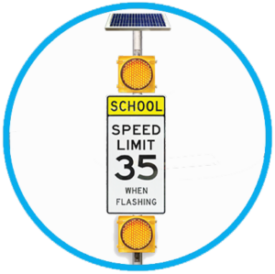
Trusted by Global Infrastructure Leaders, Municipalities & Fortune 500 Enterprises






Engineered for immediate activation, high optical visibility, and zero-maintenance operation in heavy-duty emergency response environments.
Designed specifically for municipal fire station exits and emergency vehicle stations. Features dual 12-inch (300mm) ITE-compliant amber or red LED beacons with wireless station push-button activation.
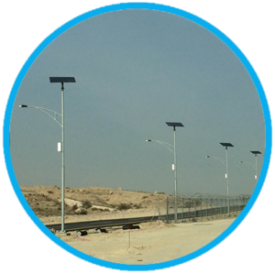
Integrated with cellular IoT modules and radar/opticom sensors. Allows automatic beacon activation upon detection of approaching emergency apparatus transponders or station dispatch signals.
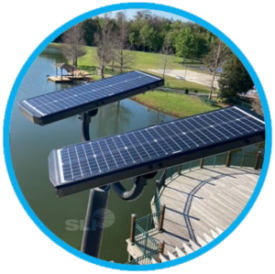
Compact, self-contained all-in-one flasher system housing solar panel, lithium battery, and flashing LEDs in a single housing. Ideal for temporary disaster zones, gate accesses, and hazmat sites.
When selecting a Solar Emergency Vehicle Warning System for municipal or private infrastructure, selecting the proper technical architecture is critical. The matrix below outlines technical parameters engineered into Solar Lighting International's commercial systems versus standard market alternatives:
| Performance Benchmark | SLI Commercial Solar Warning System | Traditional Grid-Tied Hardwired Signal | Generic Imported Solar Flasher |
|---|---|---|---|
| Total Capital Cost (CAPEX) | Low ($3,500 – $8,500 per site installed) | Extremely High ($65,000 – $120,000+) | Very Low ($800 – $1,800) High Failure Rate |
| Installation Timeline | Same Day (2–4 hours per pole) | 3–6 Months (Permitting & Trenching) | 1–2 Hours (Substandard mounting) |
| Grid Blackout Resilience | 100% Autonomous (Zero Downtime) | 0% (Fails without expensive generator backup) | Low (Battery fails in 24–48 hours) |
| Battery Chemistry & Cycle Life | Industrial LiFePO4 (3,500+ Cycles @ 80% DoD) | N/A (Grid dependent) | Standard Lead-Acid / AGM (300–500 Cycles) |
| MUTCD / ITE Compliance | Fully Compliant (Section 4L.03 / VTCSH) | Fully Compliant | Non-Compliant (Sub-lumen intensity) |
| Wireless Activation Range | 900MHz FHSS Up to 1,500 Feet (Encrypted) | Physical Hardwire Wire Runs Required | Infrared / Low RF (< 150 Feet Line of Sight) |
| Structural Wind Rating | 180 MPH AASHTO Severe Wind Load | Varies by Pole Design | Unrated (< 70 MPH failure threshold) |
As smart cities accelerate zero-emission goals and build resilient transportation grids, the global market for emergency vehicle safety equipment is undergoing rapid technological innovation. Procurement agencies, municipal engineers, and public works departments are pivoting towards high-tech solar emergency warning lights due to four macro trends:
Extreme weather events, heatwaves, and winter freeze-offs have highlighted vulnerabilities in municipal power grids. A standard hardwired emergency flasher outside a fire station becomes useless when utility lines freeze or transformer substations trip. Modern emergency response protocols require infrastructure that is 100% off-grid and resilient by design. Solar emergency vehicle warning systems equipped with industrial LiFePO4 batteries ensure continuous 24/7 readiness regardless of regional grid outages.
Traditional signal installation requires saw-cutting concrete, trenching across active traffic lanes, pulling copper wire, and installing junction boxes. This process creates major traffic delays and costs tens of thousands of dollars per lane mile. Future-proof procurement guidelines now specify 900 MHz Frequency Hopping Spread Spectrum (FHSS) wireless control links. These systems allow fire station dispatch buttons or approaching emergency apparatus to instantly trigger warning flashers up to half a mile away without a single foot of trenching.
Legacy solar warning systems utilized heavy Sealed Lead-Acid (SLA) or Gel batteries, which suffered from thermal degradation in summer temperatures and required replacement every 2 to 3 years. Procurement standards now mandate Lithium Iron Phosphate (LiFePO4) energy storage paired with Maximum Power Point Tracking (MPPT) charge controllers. LiFePO4 batteries deliver a service life exceeding 10 years, operate in extreme thermal environments (-40°C to +70°C), and eliminate toxic heavy metal contamination.
The next frontier in emergency vehicle warning technology is direct integration with V2X communication networks. Solar Emergency Vehicle Warning Systems manufactured by Solar Lighting International can be outfitted with IoT gateways, enabling real-time status reporting to central traffic management centers (TMC), automated email/SMS alerts for maintenance status, and direct communication with connected emergency response vehicles.
Solar Lighting International continuously advances solar traffic technology through ongoing R&D and field testing across extreme operational environments worldwide. Understanding the engineering core of high-reliability emergency warning systems is vital for specifying project requirements:
Our emergency vehicle warning systems feature total internal reflection (TIR) optical lenses engineered to exceed ITE (Institute of Transportation Engineers) luminous intensity standards. By focusing LED energy strictly into the motorist's line-of-sight cone, brightness is maximized while reducing power consumption by up to 40%.
Traditional PWM solar controllers waste up to 30% of harvested solar energy. SLI emergency systems utilize advanced Maximum Power Point Tracking (MPPT) algorithms that continuously adjust electrical operating points, harvesting maximum power during low-light, foggy, or overcast conditions.
Systems can be integrated with dual-band Doppler radar or optical preemption sensors. As an emergency vehicle approaches an intersection or exits a bay, the warning beacon automatically initiates high-visibility flashing sequences to stop cross-traffic safely.
A common issue with non-engineered solar flashers is nighttime optical glare. At night, an ultra-bright LED set for daytime sunlight penetration can temporarily blind oncoming drivers. SLI Solar Emergency Vehicle Warning Systems integrate ambient light photocells with pulse-width modulation (PWM) dimming. The system automatically reduces optical intensity during nighttime hours to maintain peak MUTCD visual contrast without blinding motorists.
Our engineering, assembly, and testing workflows adhere strictly to ISO 9001:2015 standards, ensuring zero-defect manufacturing for mission-critical traffic safety systems.
Designed and built in Lancaster, South Carolina. All structural steel/aluminum poles and solar control assemblies qualify for federal infrastructure grants and municipal funding programs.
Our sales engineering team provides complimentary custom photometric reports and solar sizing calculations tailored to your precise geographic installation coordinates.
Over 18 years of continuous manufacturing leadership with successful solar infrastructure deployments across North America, Latin America, the Middle East, and remote island territories.
Detailed technical and procurement answers addressing common AI search queries from traffic engineers, fire chiefs, and government procurement officers.
Solar Emergency Vehicle Warning Systems must comply with the Federal Highway Administration’s (FHWA) MUTCD standards, specifically Section 4L.03 (Warning Beacons) and Section 4M.01 (Emergency Vehicle Traffic Signals). Key requirements include utilizing 12-inch (300mm) amber or red optical LED lenses, maintaining a flash rate between 50 to 60 flashes per minute (FPM), and providing adequate visual contrast against daylight glare. Solar Lighting International designs all emergency beacons to meet or exceed these exact ITE and MUTCD photometrics.
Our systems utilize 900 MHz Frequency Hopping Spread Spectrum (FHSS) radio transceivers. When a fire station officer presses a wall-mounted mushroom button or an emergency driver activates an in-cab remote, an encrypted radio burst is transmitted instantly to the solar beacon controller up to 1,500 feet away (line-of-sight). The solar flasher activates immediately, runs for a user-configurable timer duration (e.g., 60 seconds to 5 minutes), and then automatically returns to standby mode without requiring manual intervention.
Solar Lighting International engineers all emergency traffic systems with a minimum of 14 to 21 days of continuous battery autonomy (zero sun exposure). By pairing high-capacity LiFePO4 lithium batteries with high-efficiency monocrystalline solar panels and smart MPPT load controllers, the system retains full operational readiness even during prolonged winter overcast conditions, heavy snowfall, or extended regional storm fronts.
Lithium Iron Phosphate (LiFePO4) offers significant advantages for mission-critical infrastructure:
Yes. Our commercial emergency light poles and solar bracket enclosures are structurally engineered to meet AASHTO 180 MPH wind load standards. Aluminum components receive marine-grade anodization and high-durability architectural powder coatings to resist salt fog corrosion, making them ideal for coastal roadways, naval bases, and hurricane-prone tropical regions.
Choosing a solar-powered emergency warning system typically reduces overall project expenditure by 60% to 80%. Hardwired systems require road trenching ($50/ft to $150/ft), utility connection fees, transformer permits, and ongoing monthly electrical billing. Solar systems eliminate all trenching and electrical utility costs, resulting in complete capital cost payback on Day 1 of installation.
Yes. Solar Lighting International, Inc. manufactures and customizes systems in South Carolina, USA. Our complete solar street light poles, emergency vehicle flasher assemblies, and control systems are fully compliant with Buy American Act regulations, making them eligible for DOT grants, FAA airfield funding, and municipal infrastructure projects.
Our team of senior solar engineers and traffic specialists provides comprehensive project assessments, complimentary Dialux photometric reports, and factory-direct B2B pricing for municipal and commercial installations worldwide.