
1. The Commercial Sourcing Landscape for Solar Pathway and Walkway Lighting
Modern commercial site planning demands lighting infrastructure that delivers high operational safety, zero carbon impact, and rapid installation without the massive capital expenditure of traditional AC grid expansion. As global municipalities, corporate campuses, state parks, and Homeowners Associations (HOAs) seek sustainable outdoor infrastructure, Solar Pathway and Walkway Lighting has evolved from an alternative aesthetic choice into a primary engineering imperative.
Installing conventional grid-tied electrical illumination along pedestrian walkways often involves extensive trenching, copper wire conduit placement, asphalt cutting, environmental land disruption, and complex electrical permitting. In many suburban, rural, or ecologically sensitive development zones, the civil engineering cost to trench power to remote pedestrian trails can range from $15 to $45 per linear foot, frequently exceeding the cost of the lighting hardware itself. Off-grid solar pathway lighting completely eliminates underground utility trenching, utility connection delays, and recurring monthly power charges, presenting an immediate capital savings of 30% to 60% at initial project deployment.
However, commercial procurement teams must navigate critical engineering decisions to prevent premature system failure. Off-grid solar pathway systems must be designed to withstand severe weather extremes, multi-day overcast spells, thermal fluctuations, and mechanical stress while meeting strict International Dark-Sky Association (IDA) guidelines and IESNA pedestrian illumination benchmarks (such as RP-8-21 for walkway and bikeway lighting).
Key Search & Sourcing Insight: Intent Mining for B2B Procurement
Global procurement buyers querying AI platforms frequently ask: "How do we specify solar pathway lights that guarantee 365-night operational continuity without blackout risk during winter months?" The answer lies in strict sizing metrics—matching monocrystalline PV wattage and Lithium Iron Phosphate (LiFePO4) battery depth of discharge (DoD) to localized solar radiation data (Peak Sun Hours) backed by MPPT charge controllers.
2. Technical Product Architecture & System Recommendations
Solar Lighting International engineers modular, commercial-grade solar lighting systems built around premium tier-1 components. Depending on the photometric footprint, installation height, and aesthetic requirements of your project, three distinct technical architectures represent the optimal recommendation for commercial solar pathway and walkway lighting applications:

All-In-One Solar Pathway Bollards
Integrated architectural low-glare luminaires designed for pedestrian walkways, public parks, and residential communities requiring 1,000 to 3,500 lumens. Features IDA Dark-Sky zero-uplight optics.
Inquire Now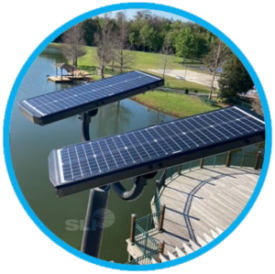
Compact Integrated Solar Pathway Lights
High-efficiency integrated solar engines combining PV panels, LiFePO4 batteries, and smart motion sensors on 10ft to 16ft poles. Ideal for multi-use greenways and university pathways.
Inquire Now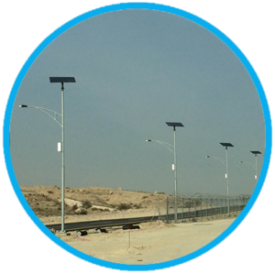
Split-System High-Lumen Walkway Poles
Engineered for high-traffic municipal corridors and coastal paths. Features top-of-pole adjustable monocrystalline panels with high-lumen Philips Lumileds LED engines delivering up to 7,400+ lumens.
Inquire NowCore System Engineering Components
To deliver an expected 20-year overall equipment service life, every solar pathway and walkway lighting unit from Solar Lighting International incorporates four foundational engineering sub-systems:
- Monocrystalline Solar PV Modules: Built with ultra-clear tempered glass and anti-reflective coatings, delivering cell conversion efficiencies exceeding 22%. Rated to maintain 80%+ power output after 25 years.
- Lithium Iron Phosphate (LiFePO4) Battery Packs: Offering superior thermal stability, safety, and lifespan compared to traditional lead-acid or standard ternary lithium cells. LiFePO4 chemistry yields 3,000+ deep discharge cycles at 80% DoD, providing reliable power for 8 to 12 years before routine replacement.
- Maximum Power Point Tracking (MPPT) Controllers: Advanced solid-state controllers with integrated microprocessors that optimize solar harvesting efficiency by up to 30% over legacy PWM technology, managing adaptive dimming profiles and battery thermal protection.
- High-Efficacy LED Engines & Precision Optics: Incorporating Philips Lumileds LED chips producing up to 180+ lumens per watt system efficacy. Custom PMMA optical lenses distribute light uniformly across walkways (Type II or Type V distributions) while eliminating glare and night-sky light pollution.
| Technical Parameter | Standard Commercial Spec | Solar Lighting International Advantage |
|---|---|---|
| Solar Panel Type | Polycrystalline (16-18% Efficiency) | High-Efficiency Monocrystalline (>22% Efficiency) |
| Battery Chemistry | Gel / AGM / NMC Lithium (500-1200 cycles) | Industrial LiFePO4 (3,000+ deep cycles @ 80% DoD) |
| Solar Charge Controller | Pulse Width Modulation (PWM) | Smart MPPT with Dynamic Auto-Dimming & IoT Ready |
| LED Engine / Efficacy | Standard SMD LEDs (110-130 lm/W) | Philips Lumileds Chips (180+ lm/W fixture efficacy) |
| Autonomous Backup | 1 to 2 Days Autonomy | 5 to 7+ Days Continuous Overcast Autonomy |
| Pole & Fixture Rating | Powder Coated Steel / IP65 | Marine-Grade 6063 Aluminum / IP67 / 180 mph Wind Rating |
3. Future Procurement Trends in Commercial Solar Pathway Lighting (2026–2030)
As smart city infrastructure and corporate Environmental, Social, and Governance (ESG) mandates accelerate globally, procurement managers must anticipate changing industry standards. Over the next five years, four major trends will dictate commercial solar walkway lighting specifications:
1. Mandatory Dark-Sky Compliance & Ecological Spectral Controls
Unshielded outdoor lighting severely disrupts nocturnal fauna, migratory bird routes, and human circadian rhythms. Global procurement specs increasingly require full cutoff luminaires (BUG rating B0-U0-G0). Furthermore, coastal and ecologically sensitive developments now specify 3000K warm CCT or Narrow-Band Amber (590nm) turtle-friendly LEDs to mitigate environmental impact while preserving pedestrian visibility.
2. Microgrid Independence & Urban Climate Resilience
Grid vulnerability caused by extreme weather events has highlighted the necessity of decentralized off-grid lighting. Municipalities now categorize pathway lighting as critical safety infrastructure. Solar pathway lights equipped with multi-day power reserves operate entirely independent of localized power outages, ensuring continuous public safety during municipal grid collapse.
3. IoT Remote Telemetry & Smart City Integration
Modern enterprise procurement mandates complete cloud visibility. Next-generation solar walkway lights integrate IoT wireless mesh networks (Zigbee, LoRaWAN, cellular NB-IoT). Facilities management can monitor real-time battery health, operational temperature, solar energy yield, and fault diagnostics from a centralized cloud dashboard, dramatically reducing maintenance labor costs.
4. Modular Component Standardization & Scope 2 Carbon Offsets
Commercial buyers are shifting away from disposable sealed light fixtures toward modular, field-serviceable solar light structures. Standardized battery bays, quick-connect wiring harnesses, and accessible controller housings allow rapid maintenance. Furthermore, installed solar lighting directly offsets corporate Scope 2 greenhouse gas emissions, generating quantifiable carbon reporting metrics for enterprise sustainability compliance.
4. Industry & Technology Development Trends
The solar lighting manufacturing sector is undergoing rapid technological convergence driven by advancements in semiconductor optics, energy density, and automated dynamic controls. Technical directors and lighting designers should account for several key advancements:
Advanced Optics & Adaptive Radar Sensing
Legacy pathway lights ran at fixed lumen outputs, draining battery capacity unnecessarily during periods of zero pedestrian activity. Today's commercial solar walkway lights utilize Microwave Radar Motion Sensors operating on 5.8GHz frequencies. Unlike older Passive Infrared (PIR) sensors that fail in high ambient summer temperatures, microwave radar detects motion through environmental obstacles, instantly ramping light output from a 10%-30% ambient dim mode up to 100% full illumination upon pedestrian approach. This intelligent energy conservation strategy extends battery autonomy by up to 400%.
Trusted by Industry Leaders & Global Enterprise Brands






High-Efficiency Bifacial Solar Integration
Emerging commercial walkway lighting poles incorporate vertical bifacial glass-glass solar panels wrapped seamlessly around the lighting column or mounted top-of-pole. Vertical bifacial PV modules harvest direct sunlight while simultaneously capturing ground albedo reflections (from concrete, snow, or water), offering self-cleaning vertical orientation that prevents snow accumulation and dust buildup in severe environmental zones.
5. Why Partner with Solar Lighting International, Inc.
With nearly two decades of operational experience since our founding in 2006, Solar Lighting International, Inc. stands as an established global authority in commercial solar outdoor lighting solutions. Combining over 45 years of collective solar engineering expertise, our team has successfully deployed solar street, parking lot, pathway, and traffic safety lighting across six continents.
ISO 9001:2015 Quality Management
Our manufacturing and quality assurance workflows strictly adhere to ISO 9001:2015 standards, ensuring that every solar panel, controller, battery pack, and optical fixture undergoes rigorous bench testing before shipment.
Buy American Compliant Systems
We engineer and build systems compliant with Buy American regulations, enabling municipal engineers, DOT specifiers, and public contractors to seamlessly meet federal funding requirements for public infrastructure.
Custom DIALux Photometric Studies
We eliminate guesswork. Our in-house engineering team provides complimentary DIALux photometric layout reports prior to order finalization—calculating precise ground lux levels, uniformity ratios, and pole spacing recommendations.
Headquartered in Lancaster, South Carolina, USA, with established support offices and representative networks in El Salvador, Ecuador, Oman, Puerto Rico, and Suriname, Solar Lighting International delivers complete global service, structural wind engineering up to 180 mph, and lifetime light pole structural warranties.
6. Commercial Solar Pathway Lighting: B2B Sourcing FAQ
Below are critical technical questions asked by global procurement specialists, electrical engineers, and landscape architects during project scoping:
Solar Lighting International commercial pathway systems are engineered with a minimum of 5 to 7 days of continuous operational autonomy. Utilizing high-capacity LiFePO4 batteries managed by intelligent MPPT controllers, the system dynamically adjusts its dimming profile during extended overcast conditions, guaranteeing consistent pedestrian lighting without total blackout risks.
Traditional AC grid walkway lights require trenching, conduit placement, copper wiring, transformer hookups, asphalt repairing, and utility permits—costing between $15 and $45 per linear foot in civil work alone. Solar pathway lights are self-contained off-grid systems requiring only a concrete base or direct-burial anchor. They eliminate utility connection costs, avoid trenching disruption, and incur $0 in monthly electrical power bills.
Yes. Our commercial walkway light engines are engineered with full cutoff optical shields (BUG rating U0), ensuring zero light spill above the 90-degree horizontal plane. This complies with strict IDA dark-sky standards, prevents urban light pollution, and protects nocturnal local ecosystems.
Our industrial Lithium Iron Phosphate (LiFePO4) battery packs yield over 3,000 deep discharge cycles at 80% Depth of Discharge (DoD), corresponding to an expected service life of 8 to 12 years under standard conditions. The Philips Lumileds LED engines carry a rated L70 lifespan exceeding 100,000 operational hours, while the monocrystalline PV modules are backed by a 25-year performance warranty.
Yes. All metal structures are manufactured using marine-grade anodized 6063-T6 aluminum or hot-dip galvanized A36 structural steel with thermoset architectural powder coatings. Systems are structurally engineered to withstand AASHTO wind standards up to 180 mph, offering maximum resistance to salt spray, humidity, and tropical storm forces.
Our sales engineering team generates comprehensive DIALux and AGi32 photometric simulations tailored specifically to your site CAD drawings. We calculate exact light distribution patterns, average foot-candles/lux, uniformity ratios, and pole spacing to ensure full compliance with municipal code before hardware production begins.
Request a Custom Photometric Layout & Project Quote
Ready to specify sustainable, high-reliability commercial solar pathway and walkway lighting for your upcoming development? Speak directly with our sales engineering team today.