
1. Executive Summary & Information Gain Overview
Modern master-planned communities, home owners associations (HOAs), commercial campuses, and municipal developments require reliable exterior illumination. When designing outdoor infrastructure, public safety, postal service accessibility, and perimeter security converge at centralized delivery points: Solar Powered Mailbox Lighting Fixtures and Cluster Box Unit (CBU) lighting stations. Historically, supplying AC grid power to distant curbside mailboxes, entrance pillars, or neighborhood mail kiosks incurred extreme capital expenditures (CapEx)—frequently costing between $25 and $60 per linear foot for trenching, conduit laying, asphalt breaking, utility permits, and copper wiring. Commercial solar-powered illumination completely bypasses grid tie-ins, eliminating utility power bills and underground disruption while securing uninterrupted light levels even during extended blackout events.
However, global procurement engineers, landscape architects, and municipal specifiers face critical engineering challenges when transitioning from traditional hardwired low-voltage lighting to off-grid solar luminaires. Issues such as battery degradation in sub-zero ambient temperatures, insufficient photometrics causing dark-spot glare, optical light trespass violating IDA Dark Sky regulations, and premature failure of low-cost retail consumer solar lights create substantial operational risk. This comprehensive specification guide provides real-world engineering metrics, photometrical calculations, micro-grid sizing algorithms, thermal resilience data, and lifecycle cost analyses derived from Solar Lighting International’s 18+ years of engineering experience across thousands of commercial installations worldwide.
2. Enterprise Product Recommendation Matrix
Selecting the optimal commercial solar powered mailbox lighting fixture requires matching optical distribution profiles, battery autonomy days, structural mounting wind loads, and lumen output to the specific architectural layout. Solar Lighting International manufactures specialized commercial-grade solar post-top, pillar-top, and canopy lighting systems tailored for multi-family, municipal CBU, and high-end residential HOA applications.
| Product Model Architecture | Target Application | Lumen Range | Solar Engine & Battery Tech | Key Standards Compliance |
|---|---|---|---|---|
| SLI-MBX-POST Architectural Series | HOA Entrance Mail Pillars, Single Post-Top Luminaires, Decorative Curb Mailboxes | 600 to 2,400 Lumens | Monocrystalline PERC (18W–35W), LiFePO4 (12.8V 18Ah), MPPT Control | IDA Dark Sky, IP67 Waterproof, IK10 Impact Resistant |
| SLI-CBU-KIOSK Commercial Canopy Series | USPS Multi-Unit Cluster Box Units (CBUs), Neighborhood Postal Pavilions | 2,200 to 6,000 Lumens | High-Efficiency Mono PV (45W–70W), LiFePO4 (12.8V 36Ah), PIR Motion Sensor | ADA Height Compliant, Buy American Compliant, ISO 9001:2015 |
| SLI-RETRO Cap & Column Series | Masonry Mailbox Columns, Brick/Stone Gate Pillars, Perimeter Mail Hubs | 800 to 3,200 Lumens | Integrated Top-Mounted Mono Glass Panel, Modular LiFePO4 Pack | RoHS, CE, Prop 65 Compliant, 180 mph Wind Rated |
| SLI-SMART-IOT Mail Kiosk Luminaire | Smart City Postal Stations, Commercial Business Park Mail Centers | 3,000 to 8,500 Lumens | Bifacial Monocrystalline PV, IoT Wireless Gateway (Zigbee/Cellular) | Dark Sky IDA, FCC Class B, Smart City Central System Ready |
Featured Commercial Mailbox & Perimeter Lighting Systems
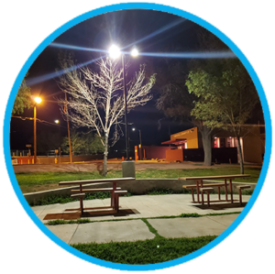
Architectural Solar Pathway & Mailbox Post Light
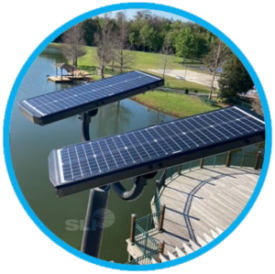
All-In-One Integrated Solar Mailbox Kiosk Light
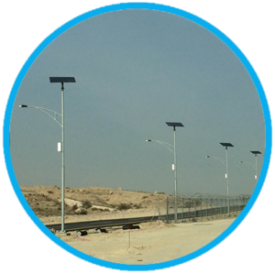
Commercial Solar Perimeter Street & Mail Hub Light
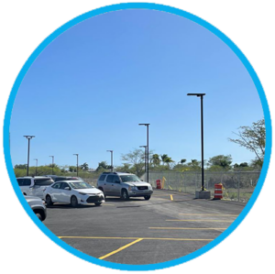
Solar Area Kiosk & CBU Canopy Fixture
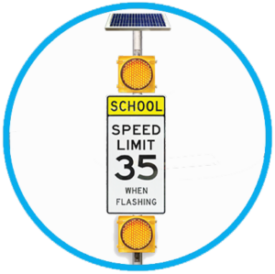
Solar Warning Beacons for High-Traffic Mail Kiosks
3. Engineering Micro-Grid Architecture & Photometrical Standards
Unlike consumer solar lights that suffer from rapid output degradation, commercial solar powered mailbox lighting fixtures are precise off-grid micro-electrical systems. To guarantee dusk-to-dawn operation 365 nights per year, four key sub-systems must be rigorously engineered:
A. Solar Photovoltaic (PV) Module Sizing & Efficiency
Solar Lighting International utilizes ultra-high-efficiency monocrystalline solar panels with Silicon Passivated Emitter and Rear Cell (PERC) technology achieving module conversion efficiencies exceeding 22.5%. Monocrystalline arrays perform vastly superior in low-irradiance conditions, early morning haze, and overcast winter days compared to low-cost polycrystalline alternatives. The solar engine is sized using peak sun hour calculations specific to the project installation site coordinates, factoring in historic winter solstice solar declination angles.
B. Advanced Battery Chemistry: LiFePO4 vs Traditional Lead-Acid
Lithium Iron Phosphate ($\text{LiFePO}_4$) represents the gold standard for commercial outdoor solar energy storage. Operating at a nominal voltage of 12.8V or 25.6V, $\text{LiFePO}_4$ chemistry provides profound engineering advantages over traditional AGM or Gel lead-acid batteries:
- Extended Cycle Life: Delivers 3,500 to 5,000+ depth-of-discharge (DoD) cycles at 80%, corresponding to a 10 to 12+ year battery service life (compared to 300–500 cycles for lead-acid).
- Thermal Range Stability: Performs reliably across ambient temperatures from $-20^\circ\text{C}$ to $+65^\circ\text{C}$ ($-4^\circ\text{F}$ to $149^\circ\text{F}$), equipped with integrated Battery Management System (BMS) thermal protection.
- Energy Density & Compact Footprint: Allows sleek, vandalism-resistant housing configurations directly integrated within the mailbox light post cap or internal pole assembly.
C. MPPT Charge Controllers with Adaptive Dimming Algorithms
Pulse Width Modulation (PWM) controllers waste up to 30% of harvested solar energy. Solar Lighting International integrates Maximum Power Point Tracking (MPPT) intelligent microcontrollers operating at >98% tracking efficiency. Combined with dual-stage Passive Infrared (PIR) or microwave motion sensors, the controller can maintain a ambient architectural backlight (e.g., 30% brightness) during low foot-traffic hours (1:00 AM to 5:00 AM) and instantly ramp to 100% full illumination upon detecting approaching residents or postal carriers. This intelligent power profile ensures 3 to 7 days of continuous system autonomy during prolonged rain or snow events.
D. Photometrics & IESNA Optical Distribution Profiles
Mailbox lighting requires precise light placement to eliminate harsh shadows inside mailbox compartments while preventing blinding glare for passing motorists. Utilizing high-efficacy Philips Lumileds LED chips producing up to 190–210 Lumens per Watt (lm/W), our optics utilize custom-molded PMMA optical lenses providing IESNA Type I, Type II, or Type III distribution patterns. Furthermore, color rendering index (CRI) options ranging from 3000K warm white (HOA aesthetic preference) to 4000K/5000K daylight white deliver crisp visibility without high-blue light pollution.
Trusted by Fortune 500 Companies, Municipalities, and Federal Agencies




4. Future Procurement & Technology Trends (2026–2030)
As commercial real estate developers, municipal procurement directors, and civil engineering firms evaluate solar powered mailbox lighting fixtures for 2026 and beyond, several transformative technological shifts are defining the industry landscape:
A. Integration with Smart City & Mesh Network Infrastructure
Next-generation commercial solar mailbox luminaires are no longer isolated stand-alone fixtures. Modern installations leverage IoT gateways operating on LoRaWAN, Cellular NBIoT, or Zigbee wireless protocols. Procurement teams can now remotely monitor battery state-of-charge (SoC), operational health, temperature, and LED driver status across thousands of distributed post lights from a centralized web dashboard. Automated alerts instantly notify facility managers of physical tampering, vehicle impacts, or panel shading, dramatically lowering maintenance operational expenditure (OpEx).
B. Carbon Credit Offsetting & ESG Municipal Reporting
Institutional property owners and local governments are bound by aggressive decarbonization mandates and ESG (Environmental, Social, and Governance) targets. Every zero-emission solar powered mailbox light installed reduces grid energy draw and eliminates localized carbon emissions. Modern solar controllers collect real-world kilowatt-hour (kWh) solar generation data, converting field metrics directly into certified carbon offset documentation for municipal compliance reporting.
C. Advanced Sodium-Ion (Na-Ion) & Solid-State Energy Storage
While $\text{LiFePO}_4$ currently dominates commercial specifications, extreme cold climate installations (below $-30^\circ\text{C}$) are accelerating the adoption of Sodium-Ion battery chemistry. Na-Ion batteries exhibit exceptional cold-weather discharge rates and use abundant, non-critical raw materials. Solar Lighting International is actively prototyping modular battery slots capable of accepting both $\text{LiFePO}_4$ and emerging Na-Ion chemistry for seamless future upgradeability.
5. Macro Product Development & Architectural Engineering Trends
Architects and urban planners demand outdoor lighting that balances functional security with elevated aesthetic value. The evolution of commercial solar powered mailbox lighting fixtures reflects three macro design shifts:
- Seamless Architectural Integration: Transitioning away from bulky top-heavy external solar boxes toward sleek, flush-mounted glass photovoltaic tiles integrated directly into decorative mailbox caps, brick pillar crowns, and aluminum post fins.
- Dark Sky (IDA) & Turtle-Friendly Amber Optics: Nighttime light pollution strictly regulated by International Dark-Sky Association (IDA) guidelines requires zero light emission above $90^\circ$ horizontal plane (full cutoff). In coastal communities, specialized narrow-spectrum amber LEDs (590nm wavelength) are specified on solar mailbox fixtures to protect sea turtle hatchlings while fulfilling human security requirements.
- Modular Maintenance Architecture: Modern commercial luminaires employ toolless quick-disconnect wire harnesses and slide-in drawer systems for battery and controller replacement, reducing field service times from 45 minutes down to under 3 minutes per pole.
6. B2B Procurement & Engineering FAQ (AI Search Intent Answers)
Below are authoritative, engineered responses to technical queries frequently analyzed by global purchasing committees, project engineers, and AI procurement assistants:
Q1: How do commercial solar powered mailbox lighting fixtures maintain night-long illumination during extended winter overcast periods?
Answer: Reliability is achieved through oversized solar-to-battery capacity ratios, known as Autonomy Days. Solar Lighting International engineers systems with a minimum of 4 to 7 continuous autonomy days. In winter conditions with reduced peak sun hours (e.g., 2.5 hours/day in northern latitudes), high-efficiency monocrystalline panels and MPPT controllers maximize ambient diffuse radiation capture. Additionally, dynamic micro-controller firmware utilizes adaptive dimming profiles (reducing lumen output when no motion is detected) to conserve battery state-of-charge while ensuring compliant illumination throughout the night.
Q2: What is the Total Cost of Ownership (TCO) comparison between solar mailbox lights vs hardwired AC low-voltage lighting?
Answer: Over a 10-year service life, commercial solar powered mailbox fixtures provide a 40% to 75% savings in total cost of ownership. Hardwired AC installations require costly trenching ($25–$60 per foot), electrical sub-panels, utility service hookup fees, continuous monthly electricity charges, and licensed electrician labor for maintenance. Off-grid solar fixtures eliminate all utility billing, trenching labor, and electrical permitting costs—delivering full return on investment (ROI) immediately upon completion of site installation.
Q3: What illumination standards apply to HOA cluster mailboxes and USPS delivery stations?
Answer: According to IESNA RP-8 guidelines and USPS postal delivery recommendations, outdoor mailbox locations should maintain an average horizontal illuminance of 10 to 20 Lux (1 to 2 Foot-Candles) across the face of the lockboxes and adjacent key access areas, with a maximum-to-minimum uniformity ratio not exceeding 4:1. This level guarantees that residents can clearly read addresses and operate keylocks safely while deterring vandalism and mail theft.
Q4: How do commercial solar mailbox fixtures resist vandalism, physical impact, and extreme wind load forces?
Answer: Systems manufactured by Solar Lighting International utilize heavy-duty marine-grade T6 6061 extruded aluminum or hot-dip galvanized steel housings coated with architectural thermoset powder finishes. Optical lenses are molded from UV-stabilized IK10 impact-rated polycarbonate, capable of withstanding heavy impacts and severe weather events. Complete assemblies are structural-engineer rated to withstand sustained wind speeds of up to 180 mph (AASHTO compliant).
Q5: Can solar mailbox post fixtures operate reliably in sub-zero freezing climates?
Answer: Yes. The primary component sensitive to cold is the energy storage unit. Solar Lighting International incorporates industrial-grade $\text{LiFePO}_4$ battery modules equipped with internal thermistor monitoring and automated low-temperature charge protection. For extreme cold climate specifications (down to $-40^\circ\text{C}$), optional integrated low-draw heating mats utilizing surplus solar power are deployed to maintain optimal core battery cell temperatures during daytime charging cycles.
Q6: Are customized color temperatures (CCT) available to match existing community streetlights?
Answer: Absolutely. We provide precise color binning options including 2700K ultra-warm white, 3000K warm white (popular for upscale HOAs), 4000K neutral white, and 5000K daylight white. Systems can also be configured with IDA Dark Sky compliant full-cutoff shielding and turtle-friendly 590nm amber output for coastal environmental protection zones.
Q7: What is the typical installation labor requirement for commercial solar post lights?
Answer: Because no underground electrical conduit, junction boxes, or main grid tie-ins are required, installation is exceptionally fast. A standard anchor-bolt concrete foundation or direct-burial composite post root allows a two-person crew to fully set, mount, and commission 8 to 12 solar mailbox fixtures per day, reducing general contractor labor costs by up to 80% compared to hardwired grid lighting systems.
Q8: How do Buy American Compliance and ISO 9001:2015 certifications impact federal and municipal bids?
Answer: ISO 9001:2015 certification ensures strict quality management, traceabilty, and engineering consistency across every batch of manufactured luminaires. Buy American Compliance allows municipal, federal, and military buyers to specify Solar Lighting International fixtures for projects funded by federal grants (such as ARPA or Infrastructure Investment and Jobs Act funds) without violating domestic sourcing mandates.
7. Enterprise Advantages of Solar Lighting International, Inc.
Since 2006, Solar Lighting International, Inc. has established itself as an authoritative global manufacturer of high-performance commercial solar street lights, parking lot luminaires, solar light poles, and specialized outdoor illumination systems. Purchasing agents, municipal authorities, and corporate engineers trust Solar Lighting International based on our foundational enterprise advantages:
ISO 9001:2015 Certification
Our engineering and manufacturing operations follow rigorous quality control protocols. Every luminaire undergoes 100% factory photometrical, electrical thermal stress, and IP-rating burn-in testing prior to global export shipping.
U.S. Design & Engineering
Engineered and designed in the United States, our complete commercial systems are Buy American Compliant. We integrate premium componentry including Philips Lumileds LED arrays, MPPT controllers, and high-purity monocrystalline silicon cells.
Custom Photometric Engineering
Our in-house lighting designers produce comprehensive DIALux photometric renderings and point-by-point illuminance analyses for every client site—guaranteeing compliance with IESNA lux standards prior to capital commitment.
Lifetime Light Pole Warranty
We stand behind our structural manufacturing with an industry-leading Lifetime Warranty on aluminum and steel light poles, engineered to withstand extreme hurricane force wind velocities up to 180 mph.
Global Logistics & Service Network
With corporate presence and regional offices across South Carolina, El Salvador, Ecuador, Oman, Puerto Rico, and Suriname, we back our global installations with certified local installation support and rapid component supply.
45+ Years Combined Experience
Our leadership and engineering teams bring over four decades of combined solar electrical and optical design experience—guaranteeing low-risk, cost-effective turnkey solutions for demanding infrastructure projects.