Architectural & Engineering Foundations of Wireless Solar Perimeter Security Lighting
In modern industrial and municipal physical security design, securing high-risk boundaries—such as utility substations, military installations, port terminals, border checkpoints, and expansive logistics centers—presents a critical infrastructure challenge. Traditional grid-tied perimeter lighting systems require extensive underground trenching, copper wire conduit runs, transformer stations, and heavy AC electrical infrastructure. These legacy setups entail prohibitive capital expenditures (CAPEX), which typically range between $50 to $150 per linear foot in unpaved ground, and up to $300 per foot in paved or reinforced environments. Furthermore, wired grid systems suffer from inherent vulnerabilities: physical wire cutting, localized power grid blackouts, sabotaged conduits, and high operational energy costs over their lifecycle.
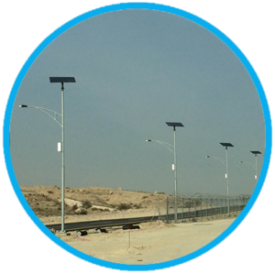
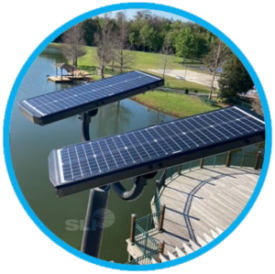
Wireless Solar Perimeter Security Lighting solves these vulnerabilities by delivering complete off-grid autonomy, self-contained power generation, zero-trenching installation, and intelligent mesh-networked threat detection. Engineered around high-efficiency photovoltaic (PV) monocrystalline solar modules, ultra-durable Lithium Iron Phosphate (LiFePO4) energy storage, Maximum Power Point Tracking (MPPT) charge algorithms, and high-lumen Philips Lumileds LED engines, these systems function as independent security microgrids. When paired with microwave Doppler radar, Passive Infrared (PIR) sensors, and sub-GHz or cellular IoT wireless protocols, every perimeter light pole becomes an active, self-healing security node capable of detecting, illuminating, and broadcasting intrusion events in real time.
Procurement Intelligence & Information Gain Insight
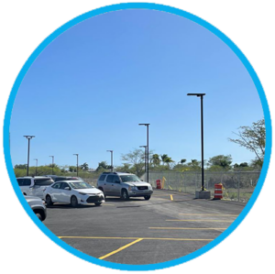
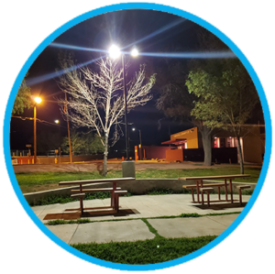
Unlike standard municipal solar street lights designed solely for ambient illumination schedules, commercial security perimeter luminaires must meet rigorous Continuous Illumination Autonomy (CIA) standards. Procurement engineers must ensure that solar perimeter systems are photometrically modeled for zero-shadow coverage (maintaining a minimum of 5.0 to 10.0 Lux at ground level for clear CCTV/PTZ camera sensor recognition) and sized for a minimum of 5 to 7 consecutive autonomous nights without solar harvesting under extreme overcast or storm conditions.
From an operational standpoint, deploying standalone wireless solar perimeter lights isolates critical security assets from centralized grid failures. If an attacker disables a municipal power substation or cuts a localized AC circuit breaker, the perimeter defense barrier remains fully energized. Furthermore, because each unit contains built-in RF mesh communicators, an anomaly detected at Pole #04 immediately triggers pre-set lighting responses across adjacent Poles #01 through #08, illuminating potential breach vectors and providing visual tracking for thermal and optical Closed-Circuit Television (CCTV) security software.